
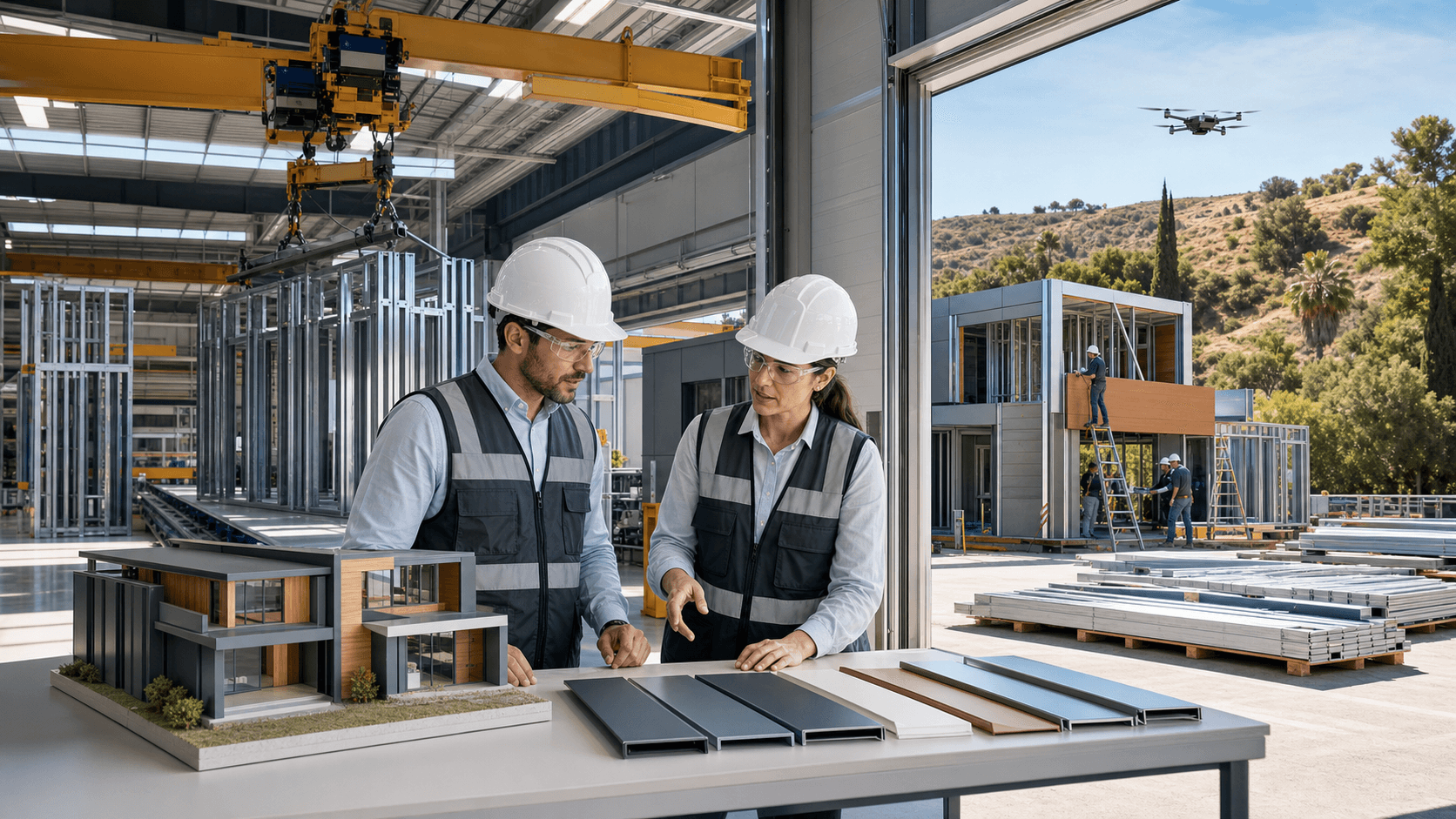
Build Faster and Smarter in California with Steel Precision
Building a home in California is exciting, but it can also feel slow and uncertain. Land is expensive, codes are strict, wildfire and earthquakes are real risks, and skilled labor can be hard to schedule. Traditional stick-built projects often stretch longer than anyone expects, with delays that add stress at every step.
Fast Struct focuses on a different path. Instead of treating every project the same, Fast Struct designs and builds with a precision-engineered light-gauge steel system and chooses the delivery method that actually fits your site and goals. That might be modular, panelized, or a hybrid approach. In this article, Fast Struct will walk through why steel precision matters, how the digital workflow works, what each method means, and how the right mix can create a cleaner, faster, and more predictable California home design and build process.
Why Steel Precision Matters for California Homes
California homes face a special mix of challenges. Many lots sit in or near wildfire-prone areas. Seismic activity is part of daily life. Coastal and inland microclimates can be tough on traditional materials. That is why the structure itself needs to stay stable and dependable over time.
With Fast Struct's precision-engineered light-gauge steel system, the frame of the home is non-combustible. This helps when you are building in or near high-fire-risk zones. The U.S.-made, high-quality steel also offers strong dimensional stability, which is helpful for seismic performance. Unlike wood, it does not rot, warp, or shrink, so your walls and connections stay consistent as seasons change.
Key benefits of Fast Struct's precision-engineered light-gauge steel system include:
- U.S.-made, high-quality steel
- Non-combustible structure for wildfire-prone regions
- No rot, warping, or shrinkage in varied California microclimates
- Better dimensional stability for long-term performance and seismic demands
- Factory precision for cleaner assembly and tighter fits
- Reduced on-site rework thanks to high-accuracy components
- A better fit for California's fire, seismic, and labor challenges
All of this is paired with factory precision. Assemblies are created in a controlled environment, so Fast Struct cuts down on on-site rework and wasted material. It also keeps job sites cleaner and more organized. For a state that faces ongoing labor challenges, moving more of the work into the factory, where skilled teams and automated steel framing machines handle the complex parts, makes a big difference in speed and predictability.
Inside Fast Struct's Digital Design-to-Steel Workflow
A big part of building with precision is connecting design, engineering, and manufacturing through one digital thread. Instead of stopping at static drawings, Fast Struct translates architectural and structural plans into production-ready files that tell the steel framing machines exactly what to do.
Here is how that process comes together in Fast Struct's Santa Clara factory:
- Plans are converted into detailed, digital, production-ready files, not just PDFs to print
- Those files feed directly into Fast Struct's light-gauge steel framing machines
- U.S.-made light-gauge steel is cut, punched, and formed to tight tolerances
- Pieces are assembled into modular volumes, panels, or hybrid components using a precision-engineered light-gauge steel system
Every assembly passes through factory QA before it leaves the building. This step helps confirm that parts fit together the way they should, which reduces surprises on site. Fewer surprises often means fewer change orders and fewer delays, which is especially important for California home design and build projects where many different parties need to stay in sync.
Fast Struct also brings an unusual mix of experience to the table. As a state-approved manufacturer, a licensed general contractor, and a commercial license holder, Fast Struct carries a rare combination of licenses. That means Fast Struct understands code requirements, constructability, and fabrication as one connected system, not separate silos.
Modular, Panelized, and Hybrid Steel: What Fits Where
Once the design and steel system are set, the next big question is: how should the home actually be delivered to the site? This is where the choice between modular, panelized, and hybrid comes in. Fast Struct does not try to force every project into one model. Instead, Fast Struct picks the approach that fits your lot, schedule, and design.
Modular
delivery means three-dimensional volumes built in the factory. Depending on the project type, modular units can arrive substantially complete, with many interior elements finished before they ever hit the road. This makes modular the faster, more finished 3D volume option, and it is often a good fit when:
- Layouts are repeatable
- The site has good access for trucks and cranes
- Speed and a tight schedule are top priorities
Panelized
delivery uses flat wall, floor, and roof panels built with the same precision-engineered light-gauge steel system. These are assembled rapidly on site, providing more flexibility and making panelized a strong choice when you need:
- More design flexibility for custom plans and elevations
- Solutions for tight urban lots with limited access
- Options for hillside sites with tricky topography
- Highly customized footprints or architectural expressions
Hybrid
delivery blends the two methods. For example, Fast Struct might build modular cores for kitchens and baths, then surround them with panelized wings. Hybrid is the best-fit delivery method when Fast Struct needs to balance site, design, and schedule, such as:
- Complex or irregular lots
- Projects balancing architectural expression and schedule
- Sites with zoning or access constraints that favor a mixed approach
Fast Struct's core differentiator is choosing this method thoughtfully. The team looks at design complexity, access, schedule goals, and local rules before recommending modular, panelized, or hybrid. That way you get a delivery strategy made for your site, not a one-size-fits-all product line.
Permits, Timelines, and Inspections Made Understandable
The permit process can feel confusing, especially when factory-built components are involved. The good news is that the review and inspection work is divided in a clear way.
Here is how it typically breaks down:
- HCD or HCD-approved agencies review and inspect the off-site, factory-built components
- Local jurisdictions review and inspect all site-specific work, including foundations, grading, utilities, installation, and zoning compliance
- Local inspectors focus on everything outside the factory-built scope
Because part of the review happens through the HCD program and part through local agencies, Fast Struct can often line up steps to save time. While local approvals are still in progress, Fast Struct can begin preparing the factory scope. Once permits are in place, production can move quickly into fabrication.
After permit approval, many Fast Struct projects move from fabrication to completion in approximately 3 to 5 months, depending on site conditions, utility coordination, jurisdictional requirements, and overall scope. This timeline is significantly faster than traditional stick-built construction, especially when much of the work is done under controlled factory conditions instead of on an open job site.
Designing the Right Steel Solution for Your California Site
Every California site tells a different story. A small infill lot in an urban core has very different needs from a hillside parcel or a larger suburban property. Fast Struct's job is to match the right steel-delivery method to those real-world conditions.
When Fast Struct looks at a new project, the team reviews:
- Lot size, access, and room for cranes or staging
- Fire and seismic exposure, including nearby risk zones
- Topography and drainage patterns
- Local design guidelines and neighborhood character
- Owner priorities around speed, customization, and budget targets
From there, Fast Struct shapes a delivery strategy. Modular often leads when speed and repeatable layouts matter most and you want faster, more finished 3D volumes. Panelized shines when the lot is tight, complex, or calls for custom architectural moves and greater design flexibility. Hybrid comes into play when a mix of modular cores and panelized wings gives the best tradeoff between site constraints, schedule, and design.
Fast Struct's precision-engineered light-gauge steel system supports this flexibility. Floor plans and elevations can be tailored to the site while still using standardized, high-precision components. This is especially helpful for spring and summer starts, when many owners want to lock in schedules and push as much work as possible into the factory before the rainy months return.
Visit Santa Clara and See Steel Precision up Close
Fast Struct designs and builds from Santa Clara, right in the heart of Silicon Valley and minutes from major tech campuses. At the Fast Struct showroom and factory, you can see the high-tech digital workflow, watch U.S.-made light-gauge steel move through framing machines, and walk the assemblies that become modular volumes, panels, and hybrid elements for California homes.
Homeowners, developers, and architects often bring early sketches or conceptual plans to explore which combination of modular, panelized, or hybrid steel best fits their project. It is a chance to match your design vision with U.S.-made steel, non-combustible and dimensionally stable structures, factory precision, and a team that carries a rare mix of HCD manufacturing, general contractor, and commercial licenses, all aligned to help you build faster and smarter with Fast Struct across California.
Get Started With Your Project Today
If you are ready to bring your vision to life with a streamlined, integrated process, our team at Fast Struct is here to help. Explore how our California home design and build approach keeps your project on time, on budget, and aligned with your goals. We will walk you through each step so you always know what comes next. Have questions or want to discuss your ideas with our team? Simply contact us to start planning your project.


