
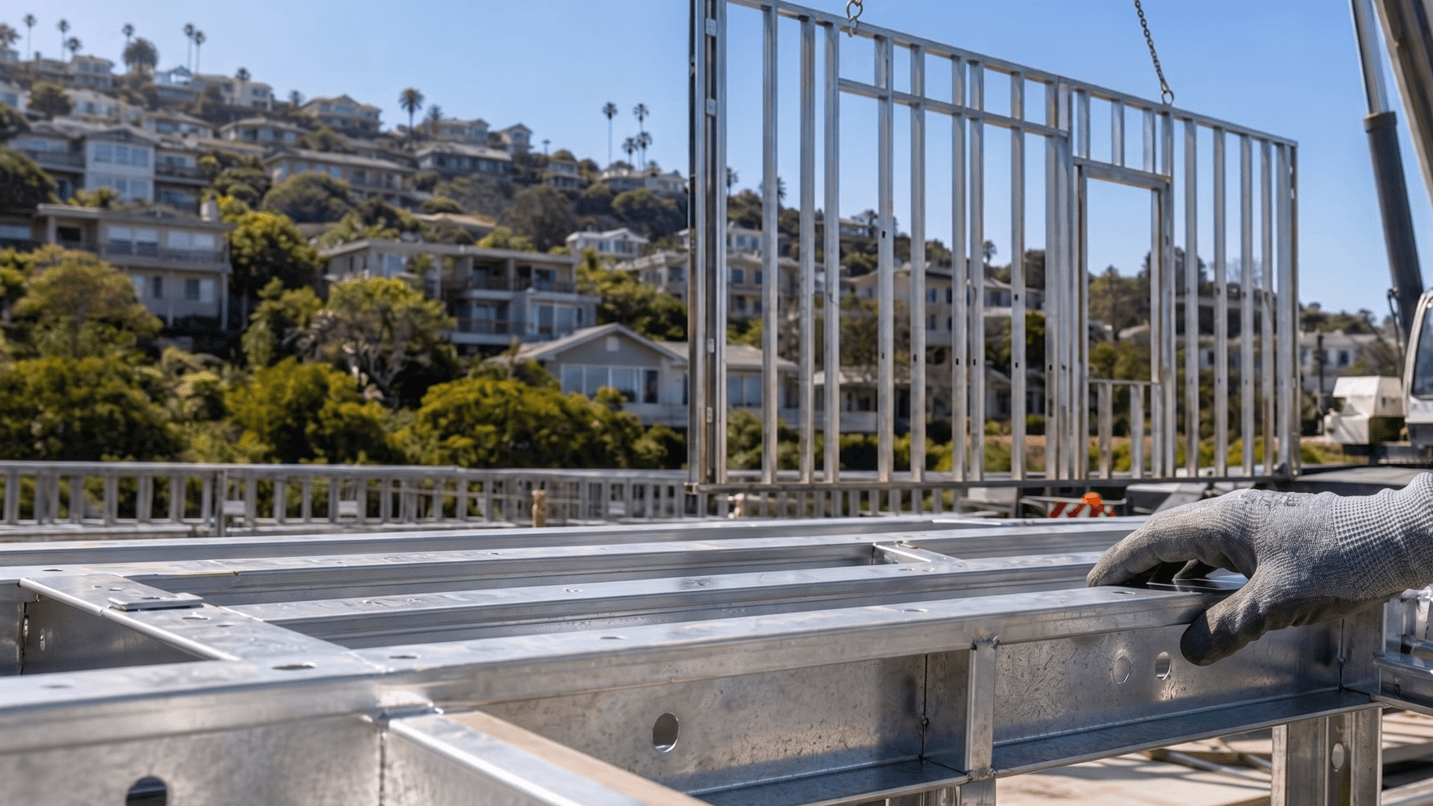
Specify Steel Right the First Time for California Homes
Specifying a precision-engineered light-gauge steel system the right way at the bid stage saves a lot of pain later. In California, we build in a mix of high fire risk, serious seismic demands, and tight labor markets. If the steel, coatings, connectors, and detailing are vague in the RFP, the field team ends up solving problems on site instead of just building.
Fast Struct is a state-approved, HCD-licensed manufacturer and licensed contractor with home manufacturing, general contracting, and commercial licenses. Our showroom and factory are in Santa Clara, in the heart of Silicon Valley, minutes from major tech headquarters, and closely aligned with the local community we serve. We work with U.S.-made light-gauge steel and connect design, engineering, and manufacturing through one digital workflow. That lets us deliver a precision-engineered light-gauge steel system that drops into place cleaner and faster, with better dimensional stability and reduced rework compared to traditional construction.
We do not believe in a one-size-fits-all delivery method. Our core differentiator is choosing the right construction method for each project rather than pushing the same system every time. This guide walks California developers, architects, and builders through the key points to write into bids and spec packages when you want to use a precision-engineered light-gauge steel system. We cover how to choose the right delivery method, how to call out steel gauges and coatings, what to say about connectors and seismic detailing, and how to set performance and schedule expectations that match real California conditions.
Choosing the Right Delivery Method for Your Site
We do not believe in one-size-fits-all. Some sites want 3D modular units. Others need flat panelized assemblies. Many do best with a hybrid of both. Your specs should keep that choice open and focus on what the project needs so Fast Struct can recommend the best-fit delivery method based on site, design, and schedule.
Modular: Faster, More Finished 3D Volumes
Modular light-gauge steel works best when you have:
- Repeatable unit types or stacks of similar plans
- A push to shorten on-site time around neighbors or busy streets
- A desire for more factory-complete work and less field labor
In this approach, faster, more finished 3D volumes are built in the factory using our precision-engineered light-gauge steel system. In your bid documents, it helps to note the expected factory completion level. For example, you can say if you want modular units to arrive with interior framing only, or with MEP rough-ins, or with more finishes ready. We can then respond with what is realistic for your project type and jurisdiction.
Depending on the project type, modular units can arrive substantially complete, while panelized systems are assembled rapidly on site for greater flexibility.
Panelized: More Flexibility for Tight Lots and Custom Designs
Panelized light-gauge steel assemblies are a better fit when:
- Lots are tight and access is limited
- Designs are more custom or have complex massing
- There are height limits, crane limits, or tricky overhead wires
Panelized systems provide more flexibility and are often better for tight lots and custom designs. For panelized systems, your specs should talk about:
- Target panel sizes and weights for your site access
- Tolerances for dimensions and plumbness that downstream trades can rely on
- The planned on-site trade sequence so we can design panels that install in that order
Hybrid: Best-Fit Delivery Method Based on Site, Design, and Schedule
Hybrid delivery means using modular where modules help the schedule and using panelized where flexibility matters more. It is the best-fit delivery method when site conditions, design complexity, and schedule pressures vary across a project. In RFPs, you can invite this by writing performance-based language, such as:
- Ask for the mix of modular and panelized that best supports the project schedule
- State that the framing system should support clean integration with local trades
- Focus on outcomes like reduced on-site duration, non-combustible structure, and reliable tolerances
Positioning your RFP this way lets Fast Struct bring method-neutral recommendations focused on project outcomes rather than a one-size-fits-all construction method.
Steel Gauge, Coatings, and Performance Criteria to Call Out
When you ask for a precision-engineered light-gauge steel system, you want to be clear about both material quality and performance. That starts with how you write steel requirements.
For gauge and source, include language like:
- U.S.-made, high-quality light-gauge steel, with documentation of source
- Structural members specified by gauge and load capacity, not vague "factory grade" terms
- Compliance with applicable California building codes and referenced standards
Coatings are especially important in coastal and higher moisture microclimates. Your specs can call for:
- Minimum galvanized coating levels appropriate for exposure zones
- Added protection in splash zones, coastal areas, or places with trapped moisture risk
- Coordination with project engineers to match coatings to actual site conditions
Performance criteria are where you can really lean on steel's strengths. Consider calling out:
- Non-combustible primary structure that supports fire resilience goals
- No rot, warp, or shrink, which protects finishes and reduces callbacks
- Better dimensional stability to hold straight lines over time
- Factory precision that supports cleaner assembly and reduced rework in the field
When you write specs around these outcomes, it gives us room to design the precision-engineered light-gauge steel system that meets or beats them while still fitting your budget and schedule goals.
Connectors, Seismic Detailing, and Fire Performance
A precision-engineered light-gauge steel system is only as strong as the way it is connected. At Fast Struct, our engineering team ties design, structural analysis, and manufacturing together in a single digital workflow. We generate production-ready files that drive the steel framing machines and include exact connector and fastening patterns.
In your bid documents, instead of generic details, we suggest you:
- Refer to an engineered connector schedule provided by the manufacturer
- Call for project-specific fastening patterns that match the calculated loads
- Require shop drawings that tie every connector to a clear load path
For seismic performance in California, your specs should touch on:
- Shear wall design that matches the project's seismic design category
- Hold-down systems and anchor details for each level and layout
- Diaphragm connections that carry forces through floors and roofs
- Clear story-to-story load paths, including framing around openings and offsets
Fire performance also needs clear language, especially for wildland-urban interface, urban infill, ADUs, and multifamily projects. You can specify:
- Non-combustible primary framing for walls, floors, and roofs where required
- Assembly ratings for walls, floors, and separation walls that meet code
- Compatibility with exterior cladding, continuous insulation, and fire-resistant barriers
- Coordination of framing depth and spacing with selected fire-rated assemblies
With these expectations written into your specs, we can engineer the steel, connectors, and assemblies so the inspection process flows more smoothly and your project is better suited to California's fire and seismic challenges.
Digital Workflow, QA, Schedules, and Roles
Fast Struct uses a high-tech, digital design-to-manufacturing workflow that connects architecture, engineering, and production. Once we receive architectural and structural plans, we convert them into production-ready files that feed directly into automated steel framing machines. Each member is cut and formed with high precision from U.S.-made, high-quality steel so assemblies fit together predictably.
You can reference this in your bids by asking for:
- A digital model that aligns with the contract drawings
- Automated production from that model to reduce manual errors
- As-built documentation that reflects final framing conditions
Factory QA is another area to specify clearly. Consider calling for:
- Dimensional checks on panels and modules before they leave the factory
- Assembly verification against approved shop drawings
- Traceable documentation for each module or panel delivered to site
On permitting and inspections, it helps to clarify who reviews what:
- HCD or HCD-approved agencies review and inspect factory-built components made off-site
- Local jurisdictions review foundations, installation, utilities, grading, zoning, and all work outside the HCD-approved factory-built scope
For schedules, owners and general contractors often need a realistic frame. After permit approval, many Fast Struct projects move from fabrication to completion in approximately 3 to 5 months, depending on:
- Site conditions and access
- Utility work and off-site improvements
- Jurisdictional requirements and inspection timing
- The overall project scope and finish level
Your RFP should also clarify factory scope versus site scope. Spell out:
- What is expected from the factory-built framing and any factory-installed components
- What remains with local trade partners or the owner's GC, such as foundations, utilities, and selected finishes
- How seasonal factors, like planning around dry-season work windows or local fire-safety periods, affect sequencing and delivery choice
Visit Fast Struct and Lock in Better Specs Now
Our showroom and factory in Santa Clara sit in the heart of Silicon Valley, close to major tech headquarters. We welcome California developers, architects, and builders who want to see our precision-engineered light-gauge steel system in person. A short plan review early in design often leads to better choices between modular, panelized, and hybrid delivery and fewer surprises in permitting and construction.
When you prepare RFPs and bid sets for precision-engineered homes, you can list Fast Struct as a state-approved, HCD-licensed manufacturer and licensed contractor, with home manufacturing, general contracting, and commercial licenses. Ask for a method-neutral proposal that compares modular, panelized, and hybrid options, and define success in terms of performance outcomes like non-combustible structure, seismic resilience, no rot, warp, or shrink, dimensional stability, and clean coordination with local trades. With clear specs, U.S.-made high-quality steel, and the right delivery method for each site, your California projects can build significantly faster than traditional construction, look sharper, and stand up better to fire, earthquakes, and labor challenges.
Get Started With Your Project Today
Explore how our precision-engineered homes can bring predictability, speed, and quality to your next build. At Fast Struct, we work with you to align every detail with your budget, schedule, and performance goals. Share your project details and we will outline a clear path from design to delivery. If you are ready to move forward, contact us so we can discuss next steps.


