
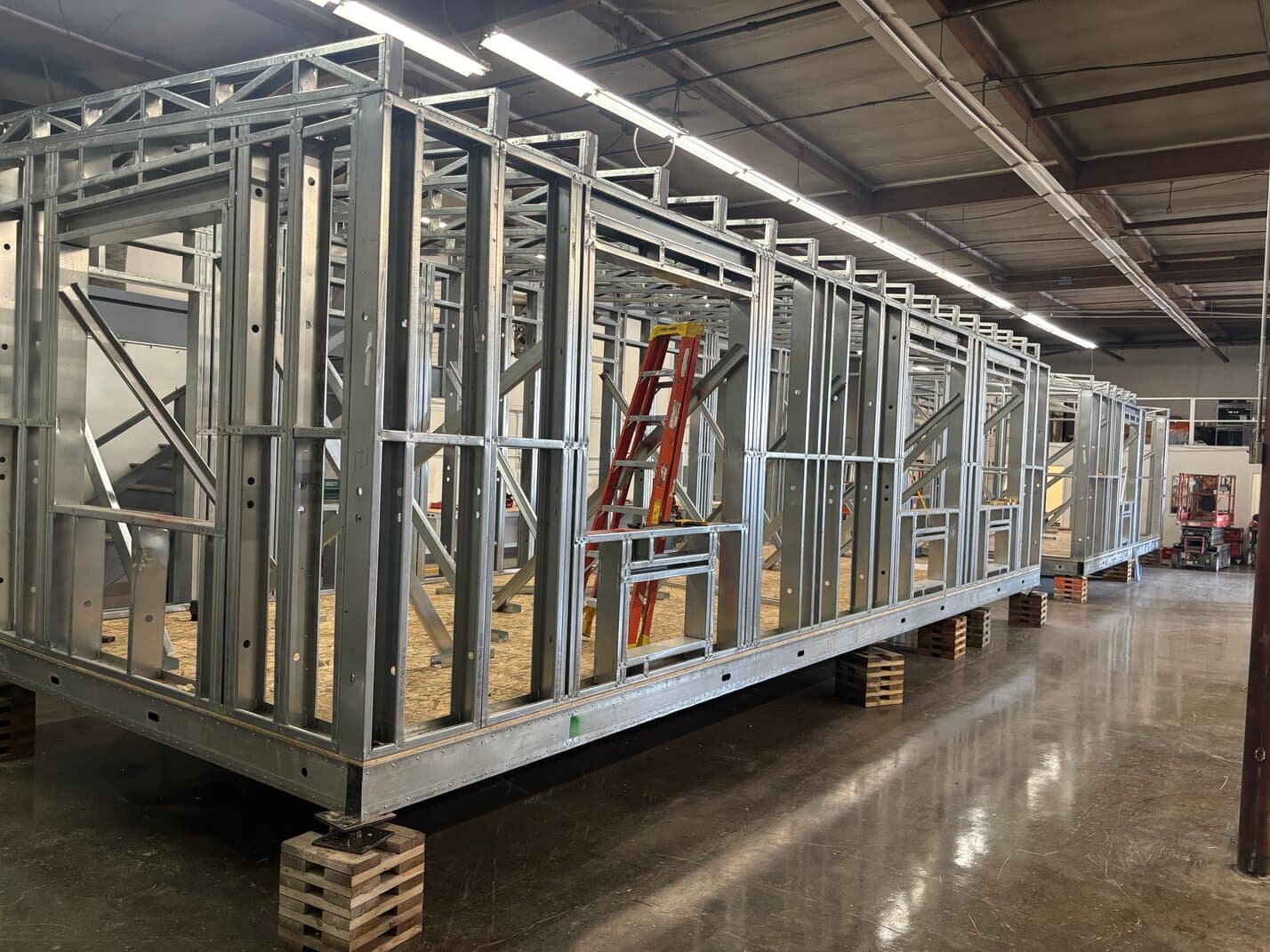
Build Faster, Live Smarter: Why Modular Quality Matters
Quality modular construction gives California homeowners a way to add real housing quickly without giving up performance or long-term value. When lots are tight, labor is expensive, and traditional builds stretch on for months, the idea of a home that is engineered in a factory and assembled in weeks is understandably appealing.
That is where quality comes in. Quality modular construction is not about temporary trailers or mobile homes. It is about permanent, precision-engineered, factory-built components that meet the same residential building codes as site-built homes. At Fast Struct, our Silicon Valley factory focuses on steel-panelized and modular homes and ADUs for California homeowners, and we design every project around that standard of quality. In this article, we will walk through what quality modular construction really looks like, how it is engineered and inspected, how it performs in California conditions, and how it protects your investment over time.
What Quality Modular Construction Really Looks Like
Panels and modules are engineered as a complete system, so framing, insulation, finishes, and mechanical paths all work together instead of being improvised in the field. The result is a home that feels solid underfoot, stays comfortable, and ages predictably.
It helps to clear up a few terms. Modular homes are built as three-dimensional sections, or modules, that are completed in a factory, transported to the site, and set on a permanent foundation. Panelized construction involves flat sections, such as wall or floor panels, that are assembled on-site into a full structure. Both are different from traditional site-built construction, where almost every piece is measured, cut, and assembled outdoors. Quality modular systems are permanent housing, not mobile homes, and they are designed around building codes in the same way as conventional homes.
Steel-framed panelized and modular systems add another layer of consistency. Steel members are straight, dimensionally stable, and do not warp the way wood can. That means walls and roofs line up as designed, openings stay square, and finishes fit correctly. In a state like California, where earthquakes, wildfires, and pests are real concerns, engineered steel systems can offer reliable resistance to movement, fire, and damage from termites or rot.
Inside the Factory: Precision Engineering for Better Homes
Quality modular construction starts long before any materials reach the factory floor. We use digital design tools and Building Information Modeling, or BIM, to create a detailed model of each project. Every wall panel, structural member, opening, and connection is laid out and checked in a virtual environment. This approach reduces clashes, helps coordinate with site conditions, and allows us to think through the path for plumbing, electrical, and HVAC before any cuts are made.
Once engineering is complete, production follows a defined sequence. Materials are cut to length based on digital files rather than hand measurements. Panels and modules are assembled in jigs that hold components in place, which keeps angles true and joints tight. Welding or fastening is carried out in a consistent environment, with tools and fixtures set up for repeatable results. Workers are not fighting uneven ground, weather, or poor lighting, so they can focus on doing the work correctly.
Quality control is woven into each stage. Instead of relying on one final inspection, there are multiple checkpoints where dimensions, connections, and materials are reviewed. Material traceability gives a clear record of what went into the project and where it is used. Standardized processes support consistent results on every panel and module, something that is much harder to maintain across a busy job site with changing crews and conditions.
Designed for California Codes, Climate, and Risk
In California, any serious approach to quality must start with building codes. Modular and panelized homes are engineered around the same structural and energy requirements that apply to site-built homes, along with any local jurisdictional reviews. That means planning for lateral loads from earthquakes, required insulation levels, ventilation strategies, and life safety rules. Quality modular construction treats these as design inputs, not afterthoughts.
Steel modular and panelized systems are well suited to these demands. Steel framing can be engineered to manage seismic forces through planned load paths and secure connections. Non-combustible main structural materials can support fire resilience, an important consideration in wildfire-prone regions. Steel is also not a food source for termites and does not rot, which can reduce some of the most common long-term structural issues that affect wood-framed homes.
For everyday living, comfort and efficiency matter just as much as structural strength. Factory-built assemblies can be designed for:
- Continuous insulation and airtightness
- Thoughtful placement of windows to control heat gain and natural light
- Solar-ready roof layouts and conduit paths
- Integrated mechanical systems that are sized for the home
These choices help keep indoor temperatures more stable, manage sun exposure, and support lower energy use over the life of the home.
From Factory Floor to Finished Home
Quality modular construction does not stop when the panels leave the factory. A successful project connects permitting, off-site fabrication, transport, on-site assembly, and final inspections into one coordinated process. We begin by aligning design and engineering with local approvals, then schedule factory production to match on-site preparation so that the foundation is ready when the panels or modules are.
Once fabrication is complete, components are transported to the property and placed using planned sequences. For panelized systems, crews assemble walls, floors, and roofs into the full structure, then complete weatherproofing and finishes. For modular sections, the modules are set on the foundation, connected, and tied together structurally. Building inspectors review work at required milestones, just as they would on a conventional project.
One of the biggest quality advantages is predictability. Because a large portion of the work is completed within a controlled indoor environment, modular projects are less vulnerable to schedule shifts from weather, crew changes, or long material lead times. Shorter on-site durations mean less exposure to sun, wind, and unexpected damage while materials sit unfinished. Many homeowners also appreciate that a panelized or modular build tends to cause less disruption to neighbors, with fewer months of open framing and day-to-day noise.
How Quality Modular Construction Protects Your Investment
When you invest in a home or ADU, you are investing in both the construction process and the long-term performance of the building. Quality modular construction focuses on reducing surprises and hidden costs. Digital planning and factory production can limit the number of change orders that arise from field conflicts, reduce material waste, and cut down on rework caused by errors or damage.
Over the life of the home, durability and performance carry real financial weight. Steel structural systems do not warp or shrink in the way that can cause sticking doors or cracking finishes. Thoughtful building envelopes and mechanical layouts support consistent comfort and can help equipment operate within its intended range for longer. Many homeowners find that fewer structural concerns and a well-sealed shell translate into less maintenance and more predictable upkeep.
Questions about appraisals, financing, and resale often come up with modular construction. Quality makes a difference here too. When a modular or panelized home is built on a permanent foundation, complies with local building codes, and is documented clearly, lenders and appraisers typically treat it in line with comparable site-built homes. Over time, what buyers respond to is the same in any home: solid construction, good design, and a comfortable, efficient place to live.
As more Californians look for ways to add space through new homes or ADUs, quality modular construction offers a path to build faster without sacrificing what matters most. By focusing on engineering, factory precision, and performance in our specific climate and regulatory environment, it is possible to create homes that feel thoughtful from the first day and stay that way through the seasons.
Financing and appraisal outcomes vary by lender, appraiser, and market conditions.
Get Started With Your Project Today
If you are ready to see how Fast Struct can accelerate your build without compromising standards, take a closer look at our approach to quality modular construction. We partner with you from early planning through final delivery so your project moves forward with clarity, speed, and cost control. Share your goals and constraints, and we will outline a tailored path that fits your timeline. To start the conversation, simply contact us and a member of our team will follow up promptly.


