
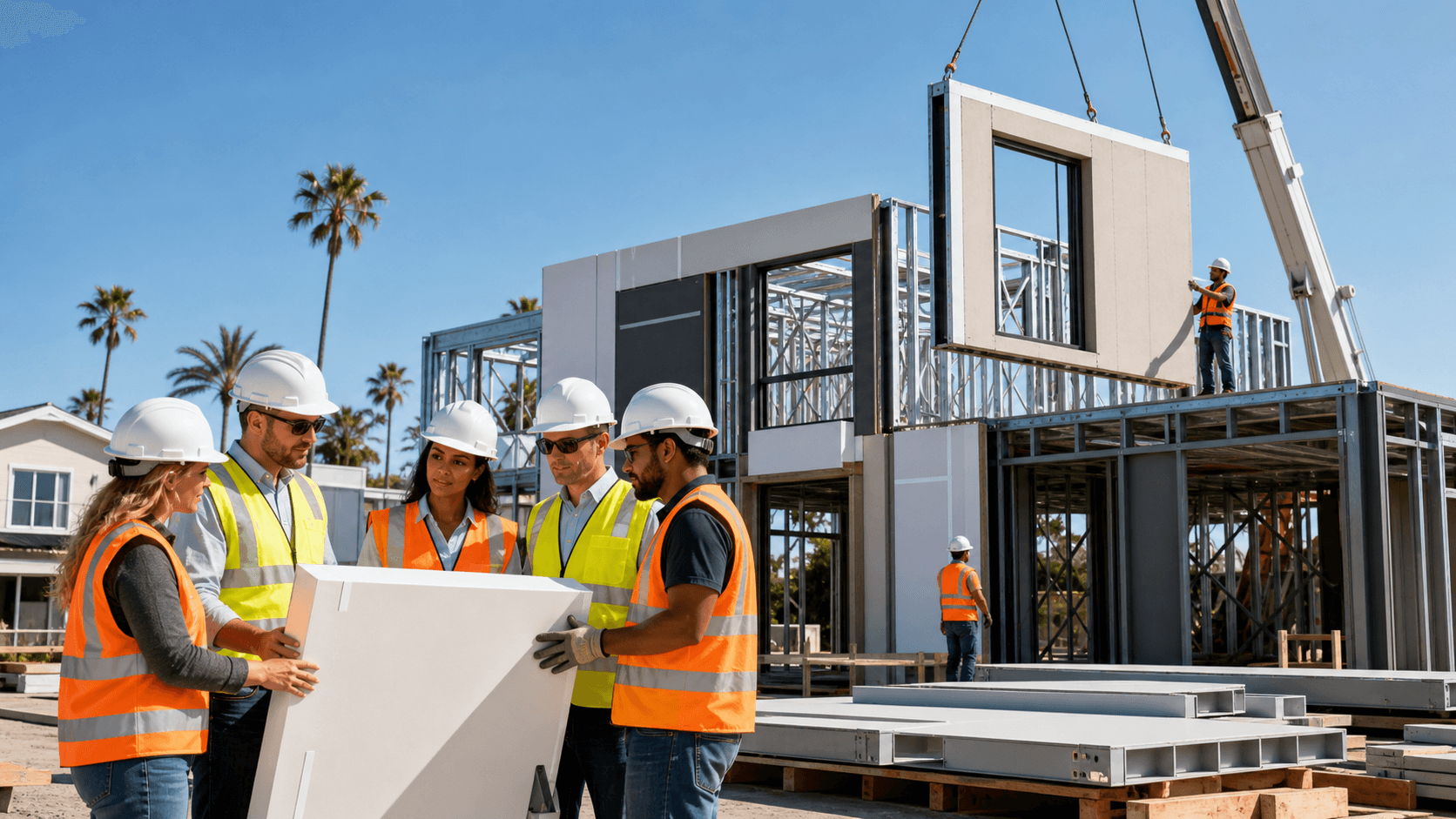
Rethinking the benefits of modular construction in California starts with a simple idea: no single building method works best for every lot, every city, and every schedule. The term "modular" sounds neat and tidy, but real projects deal with hillsides, tricky access, picky plan reviewers, and tight timelines. That means the delivery method has to bend around the project, not the other way around.
At Fast Struct, we work as a factory and design-build contractor using a precision-engineered light-gauge steel system. In our Santa Clara factory, we create modular, panelized, and hybrid homes built around each California site. The big win is not "modular" alone; it is having one integrated team that can match the right mix of systems to the lot, jurisdiction, and design, from first sketch to final assembly.
Why One-Size-Fits-All Modular Often Falls Short in California
People often hear big promises about the benefits of modular construction: faster build time, better quality, more predictable results. Those ideas sound great on paper, but they can fall apart when you try to drop the same 3D box on:
- Steep hillside sites
- Tight urban infill lots with narrow access
- High fire risk zones
- Properties with complex utility or easement conditions
California adds extra layers to this. There are strict building codes, detailed seismic rules, wildfire concerns, and a maze of local rules on top of state oversight. A fixed, all-3D modular approach can feel stuck when the land or the city wants something different.
Our approach starts at the other end. We look at the site, the design intent, and the schedule, then decide if it makes more sense to go modular, panelized, or hybrid. The delivery method follows the project, not the marketing label.
Inside Our Precision-Engineered Steel System
Behind every project is a high-tech digital workflow that connects design, engineering, and manufacturing. Instead of redrawing things over and over, we create a detailed digital model, then turn those plans into production-ready files that feed directly into our steel framing machines.
Here is what that looks like in practice:
- U.S.-made, high-quality light-gauge steel coils arrive at the factory
- Files from our design team drive the machines that cut, punch, and form each member
- Components are assembled into wall, floor, or volumetric units with tight tolerances
- Assemblies go through factory quality checks before heading to the site
This gives several real-world benefits:
- Non-combustible structure for better fire resistance
- No rot, warp, or shrink like traditional framing materials
- Better dimensional stability and cleaner assembly
- Less rework on site, which is especially important with California labor conditions and inspection schedules
All of this is built around California's fire and seismic challenges, so the system is tuned to what local projects actually face.
Modular, Panelized, or Hybrid: Choosing the Right Fit
Full modular can still be a powerful tool. In our system, modular means precision-engineered 3D volumes that may arrive substantially complete, depending on the project and jurisdiction. This can shine when:
- You have repeatable unit types, like multi-unit projects
- Crane access is reasonable and planned early
- The schedule benefits from more work done in the factory
Parts of the building, such as rooms or stacked units, can come with framing, sheathing, and in some cases interior build-out completed off-site. Off-site work is reviewed and inspected by HCD or HCD-approved agencies.
Panelized delivery looks different. Here, we manufacture precision light-gauge steel wall and roof panels in Santa Clara, then assemble them rapidly on site. Panelization can be a better match when you need:
- More custom forms or irregular footprints
- Easier transport to tight lots or narrow streets
- Step-by-step on-site assembly that works around existing structures
With panelized systems, you still get non-combustible steel, no rot or warp, and factory precision, but with more flexibility for unique designs and tricky access.
Hybrid delivery blends the two. This "best-fit" method might use modular cores for repeated spaces, along with panelized wings or ground floors. Or it might place panelized lower levels on a complex site, then set modular upper floors where crane logistics make sense. Our digital models help us test which parts should be modular, panelized, or site-built to balance speed, constructability, and schedule.
Permitting, Inspections, and Realistic Timelines
Many people are unsure how approvals work when a factory is involved. The process usually breaks out into two main roles:
- HCD or HCD-approved agencies: review and inspect the factory-built components, confirm they meet California codes, and apply labels to approved units or assemblies
- Local city or county: review and inspect foundations, installation, utilities, grading, zoning issues, and anything that sits outside the approved factory-built scope
We hold a rare combination of licenses as both a contractor and a state-approved, HCD-licensed manufacturer. That means home manufacturing, general contractor, and commercial licensing live under one roof, which helps keep responsibility clear from start to finish.
On timing, many projects that already have permits can move from fabrication to completion in roughly 3 to 5 months, depending on site conditions, utility work, jurisdictional requirements, and scope. Off-site fabrication can run in parallel with on-site work, which helps avoid some of the delays that slow down traditional construction, like crowded trade schedules or long gaps between inspections.
Why Our Silicon Valley Roots and One-Team Model Matter
Our factory and showroom sit in Santa Clara, in the heart of Silicon Valley and close to major tech offices. We borrow a lot from that mindset: digital workflows, data-driven decisions, and advanced manufacturing, all applied to housing through a precision-engineered light-gauge steel system.
For architects, builders, developers, and homeowners across California, the real benefit is not choosing "modular" as a buzzword. It is having one integrated team that can:
- Study the lot, zoning, and access early
- Match modular, panelized, or hybrid delivery to the design and schedule
- Coordinate permitting, engineering, manufacturing, and construction
- Stand behind the project from early feasibility through on-site assembly
In the end, the benefits of modular construction in California show up when modular is one tool in a flexible system, not a one-size-fits-all rule. The smartest projects are built with the right method for the site, not just the right slogan.
Get Started With Your Project Today
Discover how the benefits of modular construction can help you deliver projects faster, with greater cost certainty and consistent quality. At Fast Struct, we work with you from concept through completion so your team can focus on design, performance, and outcomes instead of job site surprises. If you are ready to explore a modular approach for your next building, contact us and we will help you map out the right path forward.


