Decoding California Building Codes for Factory-Built Steel Homes
California building codes can feel like a different language, especially when you start looking at factory-built or modular homes. The rules are strict, the acronyms are confusing, and every city seems to have its own way of doing things. Yet if you want a home that can stand up to wildfire risks, earthquakes, and tight labor markets, understanding how the codes work is not optional.
We work with this code space every day through our precision-engineered light-gauge steel system. Our goal here is to unpack how California's modular and factory-built building codes apply to steel homes, and how Fast Struct's approach, selecting the right construction method for each project instead of forcing a one-size-fits-all solution, combined with an integrated digital design and manufacturing process, can make the path from idea to keys feel much more predictable.
How California Regulates Factory-Built Steel Homes
When you talk about factory-built homes in California, you are really talking about two main players: the state and your local city or county.
At the state level, the California Department of Housing and Community Development, often called HCD, is in charge of reviewing and approving the factory-built structural parts of your home. That means things like:
- Precision-engineered light-gauge steel frames
- Wall and floor panels built in the factory
- Fully or partially assembled modular units
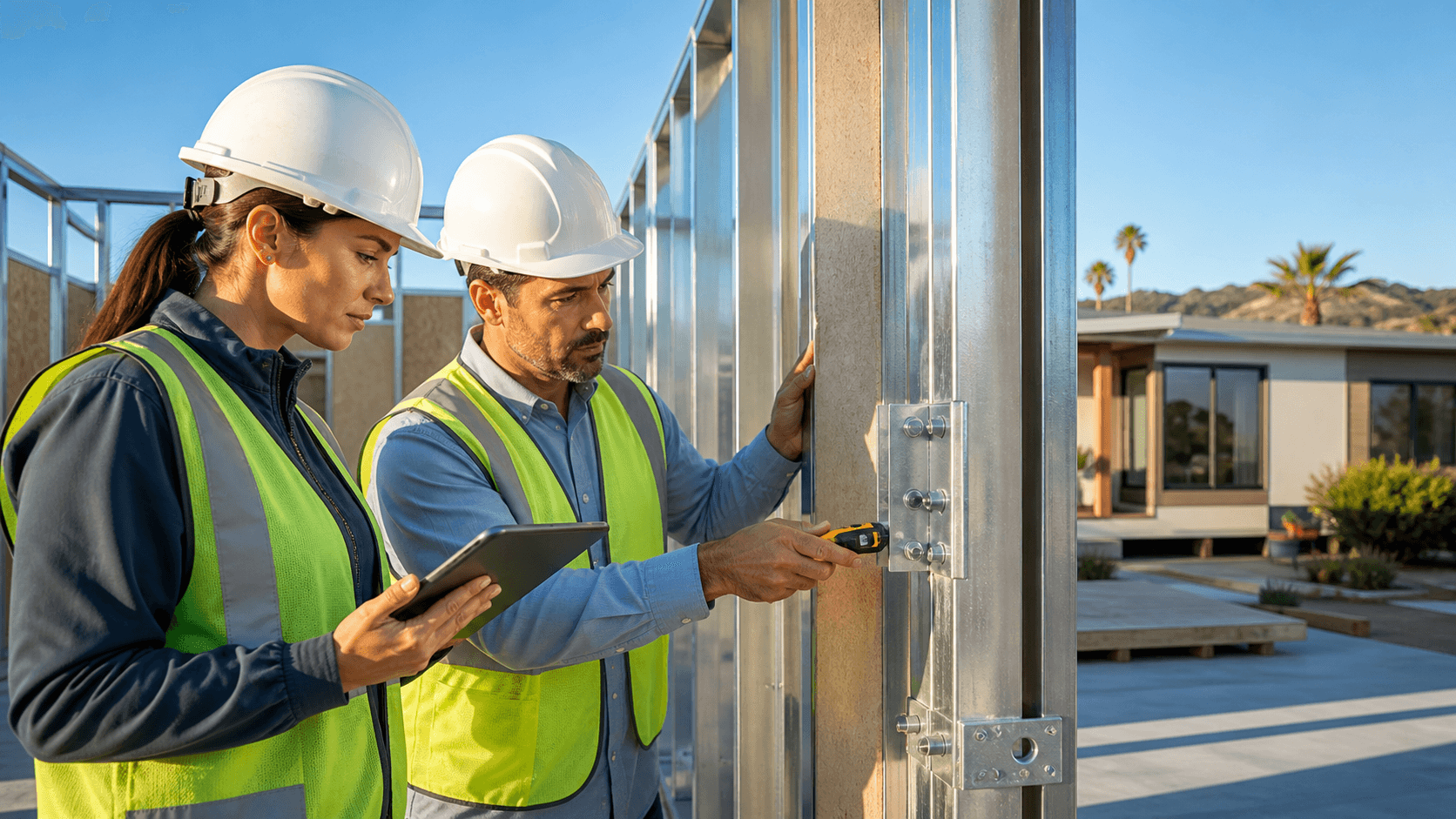
- The structural connections inside those factory-built parts
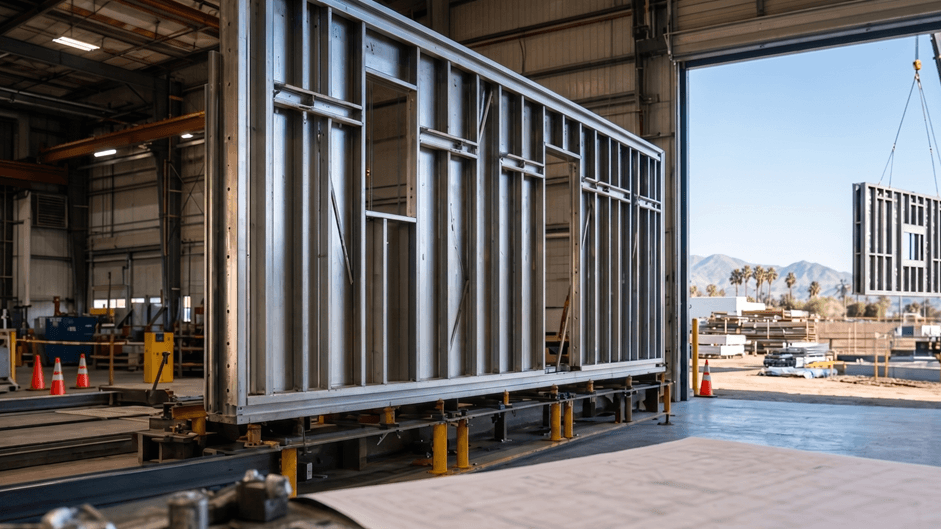
HCD or HCD-approved agencies review and inspect factory-built components that are manufactured off-site. They review the plans for those components, check the engineering, and inspect the work in the factory. For Fast Struct, that happens in our Santa Clara facility, where the precision-engineered light-gauge steel system is produced in a controlled environment.
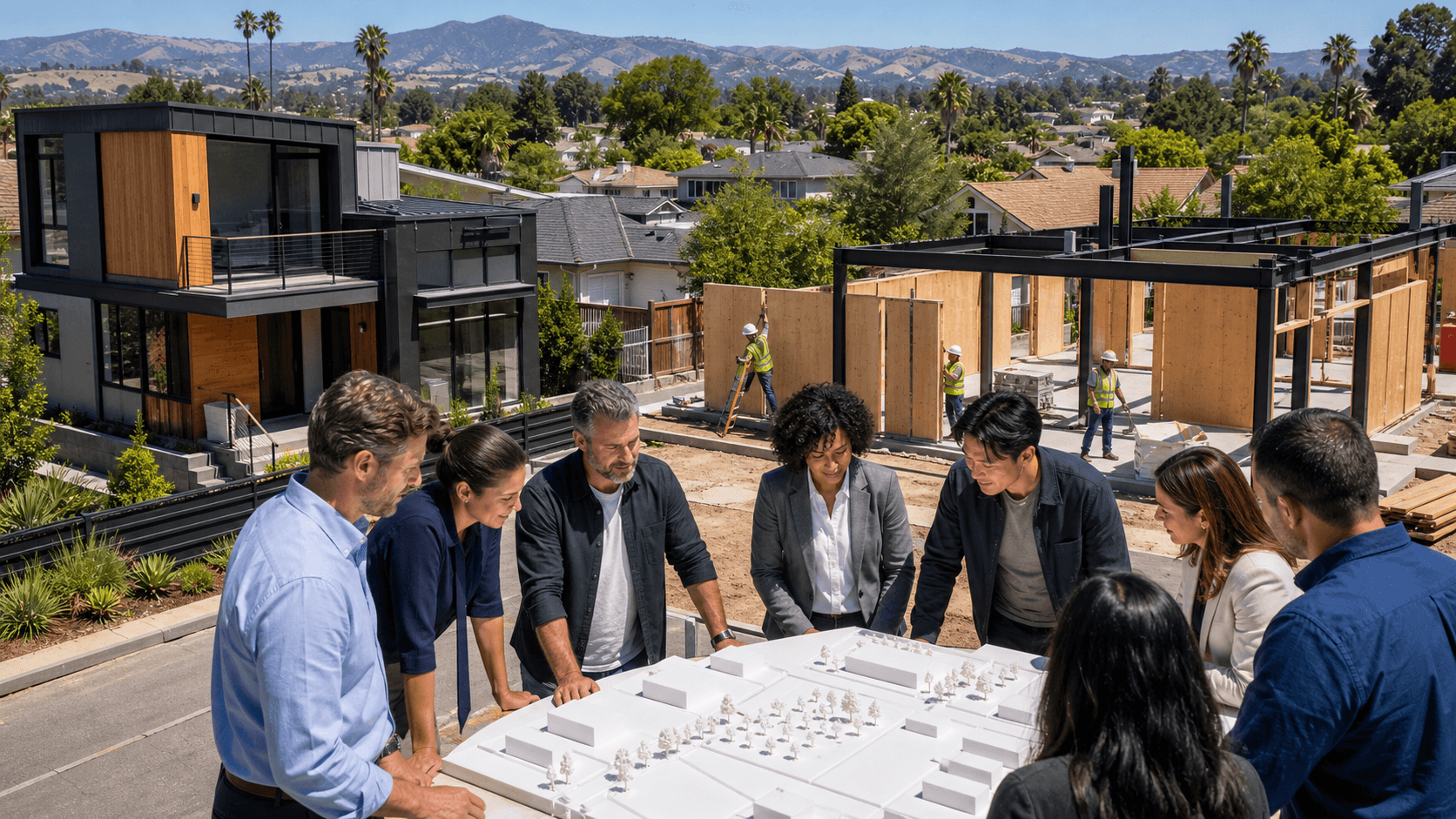
Local building departments still have a big job. Cities and counties are responsible for reviewing and inspecting all site-specific work, including:
- Foundations and slabs
- Grading and drainage
- Utilities, including water, sewer, and electrical service to the home
- Site access, driveways, and applicable fire department requirements
- Zoning, setbacks, height limits, and use
- Any on-site installation work that is not part of the HCD-approved factory-built scope
Because Fast Struct is both a state-approved, HCD-licensed manufacturer and a licensed contractor, we sit in the middle of these two worlds. That rare dual role helps us keep the line clear between what is reviewed at the state level and what belongs to the local building department, so owners and developers are not stuck trying to translate code terms on their own.
Why Codes Lean Toward Precision-Engineered Light-Gauge Steel
California codes care a lot about three things: fire, earthquakes, and long-term performance. That is where a precision-engineered light-gauge steel system fits naturally.
With the Fast Struct system:
- The main structure is U.S.-made, non-combustible, high-quality steel
- The framing does not rot, warp, or shrink like wood can
- Dimensional stability stays more consistent through heat, smoke, and moisture swings
- Factory precision improves fit, reduces rework, and supports cleaner assembly on site
In a state where long, dry seasons and wildfire exposure are top of mind, a non-combustible structure is a big deal. Steel framing does not add fuel to a fire the way traditional framing can. For seismic design, the predictable behavior of cold-formed steel helps engineers create clear, code-compliant load paths.
Factory precision also supports code compliance in a very practical way. In our Santa Clara facility, fastening patterns, stud spacing, and connection details are repeated the same way every time. That consistency means:
- Inspectors see the same detailing from project to project
- Engineers can rely on repeatable performance
- Rework on site is reduced because pieces fit the way they were designed
- Assembly stays cleaner and more controlled, which supports quality and schedule
All of this makes life easier during plan-check and inspection. When every connection has a defined place and purpose, building officials have clear information to review instead of guesswork. It also makes Fast Struct's system a better fit for California's specific fire, seismic, and labor challenges.
Modular, Panelized, and Hybrid: Different Codes, Same Steel System
A key Fast Struct differentiator is that we do not start every project by saying, "You must use modular." Instead, we look at the site, the design goals, and the schedule, then choose the delivery method that fits best. All three options use the same precision-engineered light-gauge steel system, but the code and inspection workflows look a little different.
Modular: Faster, More Finished 3D Volumes
With modular, we build three-dimensional steel units in our Santa Clara factory. These can include structure, exterior walls, and, depending on the project type, varying levels of interior completion. HCD or HCD-approved agencies inspect those units in the factory. By the time they reach the site, local inspectors mostly focus on:
- Foundations and anchorage
- Utility connections
- Unit-to-unit connections and weather sealing
Because much of the work is pre-checked off-site, on-site inspection can be shorter and more focused, and modular units can arrive substantially complete when that approach aligns with the project.
Panelized: Flexibility for Tight Lots and Custom Designs
Panelized projects use flat-pack steel wall and floor panels. These are well-suited when:
- The lot is narrow or tucked into a tight urban setting
- The design needs more custom layouts
- Access for large modular boxes is limited
The panels are still produced with HCD-reviewed factory-built components, but more assembly happens on site. Local inspectors see more of the structural assembly in real time, which can be helpful on complex or custom projects, while still benefiting from the precision and consistency of Fast Struct's factory work.
Hybrid: Best-Fit Delivery Method Based on Site, Design, and Schedule
Hybrid projects combine modular units with panelized elements. For example, core areas might arrive as modular volumes, while wings or unique shapes are framed with panelized steel. This mix allows Fast Struct to select the best-fit delivery method based on real site conditions, design complexity, and schedule.
From a code standpoint, the hybrid approach can lead to smoother plan-check because it is crystal clear which portions fall under factory review and which are inspected locally. From a delivery standpoint, it lets owners and developers balance speed, flexibility, and access constraints without sacrificing the advantages of the precision-engineered light-gauge steel system.
From Digital Design to Keys: Making Codes More Concrete
A big part of making modular and factory-built building codes in California workable is turning them into something measurable and repeatable. Fast Struct's high-tech process connects architectural design, engineering, and manufacturing in one digital workflow.
Here is how that plays out:
- Architectural plans are engineered and checked for code compliance
- Those plans are translated into production-ready files
- The files feed directly into our automated steel framing machines
U.S.-made light-gauge steel coils are cut and formed with high precision using top-quality materials. Every stud, track, and joist is labeled and pre-engineered. Assemblies move through factory quality checks before they leave our Santa Clara factory and showroom hub in the heart of Silicon Valley, just minutes from major tech headquarters.
This digital and standardized approach gives engineers, HCD reviewers, and local inspectors something very concrete to work with. They can see:
- Exact stud sizes and spacing
- Connection types and locations
- Clear load paths for gravity and seismic forces
- Details that support fire resistance and durability
When everyone is looking at the same data-rich model, code conversations get clearer, surprises on site are reduced, and the benefits of factory precision show up directly in inspection and performance.
What to Expect From Permitting to Move-in and Why Local Roots Matter
A typical Fast Struct project follows a logical sequence, even though the details of each home are unique. The general flow looks like this:
- Code-aware design and engineering using our precision-engineered light-gauge steel system
- HCD plan review and approval for factory-built portions
- Local jurisdiction plan check for foundations, grading, utilities, and other site work
- Factory fabrication of modular units, panelized components, or both after permits are in place
- On-site assembly, connections, and finish work
Once permits are approved, many Fast Struct projects move from fabrication to completion in approximately 3 to 5 months, depending on things like site conditions, utility coordination, jurisdictional requirements, and project scope. That timeline is often significantly faster than traditional all-site-built construction, while still staying aligned with California code expectations.
On-site completion can look different depending on the chosen method:
- Depending on the project type, modular units can arrive substantially complete, then be set, tied together, and finished
- Panelized systems are assembled rapidly on site, providing greater flexibility for layout and finishes
- Hybrid projects use a mix of both to match code needs, site geometry, and schedule
Fast Struct holds an uncommon combination of credentials: a licensed general contractor, a licensed home manufacturer, and a licensed commercial contractor. Our factory-built components are reviewed and inspected under California Department of Housing and Community Development (HCD) oversight or HCD-approved agencies, while our on-site work is managed through standard local jurisdiction permitting.
This rare combination allows us to deliver residential, mixed-use, and specialized projects under one coordinated team using a unified, precision-engineered light-gauge steel system.
Because our showroom and factory are both in Santa Clara, we stay close to the communities we build in. Being located in the heart of Silicon Valley, just minutes from major tech headquarters, shapes how we work: high-tech, transparent, and performance-focused.
For owners and developers trying to make sense of California's code environment, Fast Struct's combination of a precision-engineered light-gauge steel system, U.S.-made high-quality steel, digital manufacturing, and deep licensing credentials offers a clearer, more predictable path to a code-ready steel home that responds directly to California's fire, seismic, and labor challenges.
Get Started With Your Project Today
If you are planning a new modular project, we can help you navigate every detail of modular building codes in California, so your schedule and budget stay on track. At Fast Struct, our team collaborates with you early to align design, compliance, and constructability. Share your project goals and constraints, and we will outline clear next steps tailored to your timeline. Ready to move forward with confidence? Contact us to start your modular build.