Navigating California Permits with Precision Steel Homes
Getting permits for factory-built projects in California can feel confusing, especially when you add fire rules, seismic codes, and tight labor markets on top. Projects need to move faster, but they also need to be safer and more consistent. That is a big reason many homeowners, developers, architects, and builders are turning to precision-engineered light-gauge steel systems instead of doing everything in the field.
Fast Struct's core differentiator is simple: we do not force a one-size-fits-all modular solution. We choose the right construction method for each project, modular, panelized, or hybrid, based on the site, design, schedule, and jurisdiction. That approach pairs especially well with how California handles approvals.
In this article, Fast Struct explains how permits work for factory-built steel projects and how choosing the right delivery method can make the permit path smoother instead of harder.
How Factory Approvals and Local Permits Work Together
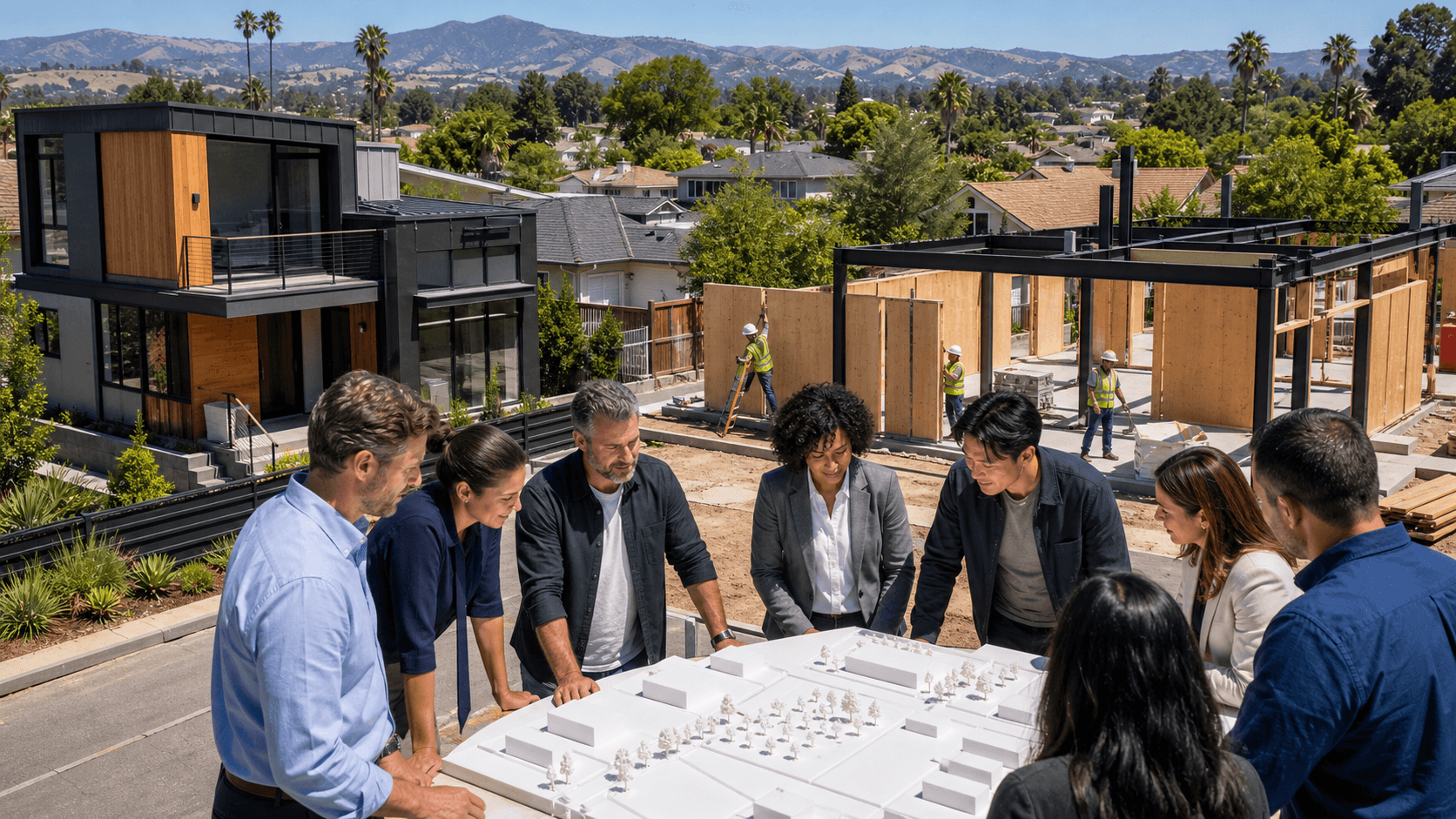
With factory-built housing in California, permits are shared between the state and your local city or county. It is like a relay race: the state handles one part, the local building department handles the rest.
Here is the basic split of authority for precision-engineered light-gauge steel projects built with Fast Struct's system:
- HCD or HCD-approved agencies review and inspect the factory-built components that are manufactured off-site
- Local jurisdictions review foundation, grading, and site work
- Cities and counties control zoning, setbacks, and use type
- Local inspectors review and inspect utilities, installation, and anything outside the approved factory-built scope
For a precision-engineered light-gauge steel system, this split has a big advantage. The factory-built pieces are reviewed and inspected in a controlled environment before they ever show up on your site. Because Fast Struct is a state-approved, HCD-licensed manufacturer, our steel modules and panels are inspected in our Santa Clara factory as we build them.
A typical permit path with Fast Struct looks something like this:
- Design and engineering define what is factory-built and what is site-built
- HCD or an HCD-approved agency reviews the modular or panelized system for the factory-built scope
- Your architect or local team submits plans to the city or county for foundation, grading, utilities, installation, and other site-specific work
- The Fast Struct team coordinates both sides so the approved factory scope and local permit match cleanly
The result is fewer surprises. Local inspectors can focus on foundations, utility tie-ins, and installation, while knowing the factory-built steel components already passed inspections before they left the factory.
Choosing Modular, Panelized, or Hybrid for Permit Success
One of the biggest mistakes in factory-built construction is trying to force every project into the same delivery method. Fast Struct's core differentiator is that we do the opposite. Instead of pushing a single solution, we start by asking what the site, design, schedule, and jurisdiction need, then match that to modular, panelized, or a hybrid approach.
Here is how Fast Struct defines each option in our precision-engineered light-gauge steel system:
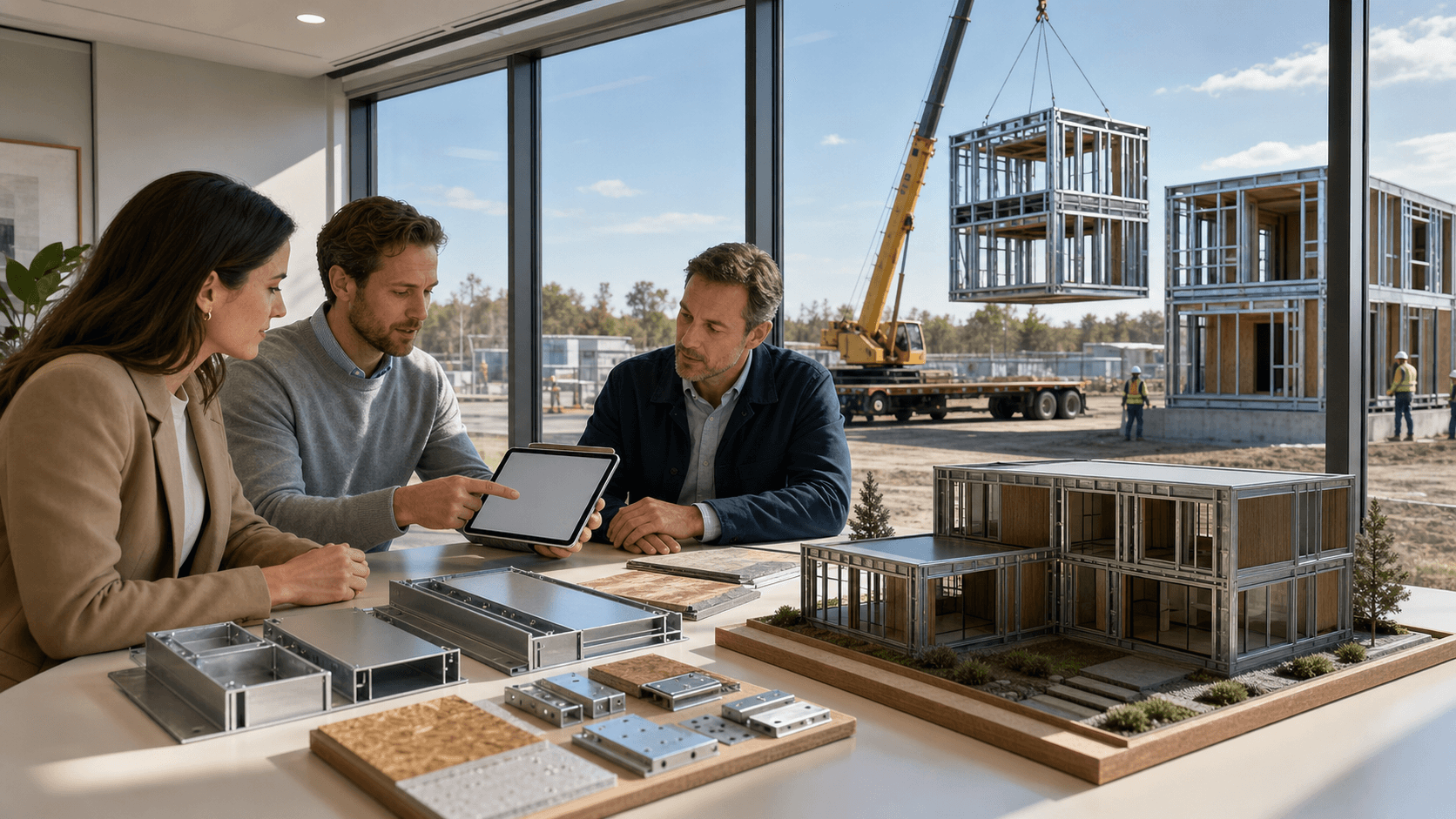
- Modular: fully finished 3D volumes built in the factory for faster delivery and more complete interiors
- Panelized: wall, floor, and roof panels built flat in the factory, offering more flexibility and better fit for tight lots and custom designs
- Hybrid: a mix of modular volumes and panelized elements in one project, used as a best-fit delivery method based on site, design, and schedule
Each path has different permit and project advantages:
- Modular volumes can simplify review when the same 3D units repeat, because that factory scope is clearly defined, precision-engineered, and pre-inspected. These modules often arrive substantially complete, depending on the project type.
- Panelized systems can be easier on tight urban lots, on sites with tricky access, or for highly customized layouts, because panels ship flat and assemble rapidly on site.
- Hybrid projects let Fast Struct speed up repeated parts of the building with modular pieces, while still giving local teams flexibility with panelized or site-built sections where design review is more complex.
We look at questions like:
- Is the site steep, narrow, or hard to reach with large trucks or cranes?
- Does the design repeat similar units, or is it highly custom?
- How strict is the local design review process?
- How aggressive is the schedule, and what are the labor limits in the area?
By answering these early, Fast Struct can line up the right permit strategy with the right delivery method, modular, panelized, or hybrid, instead of fighting the process later.
Inside Fast Struct's Digital Steel Factory and QA Workflow
Behind every permit set is real hardware: U.S.-made, high-quality steel, screws, and connections that have to fit together in the field. This is where Fast Struct's digital factory model shines. We connect design, engineering, and manufacturing in one continuous workflow.
Here is how that works in practice with Fast Struct:
- Architectural and structural plans are converted into production-ready digital files
- Those files feed directly into light-gauge steel framing machines
- We use U.S.-made, top-quality steel, cut and formed with high precision
- Every stud, track, and opening is labeled and preplanned for efficient assembly
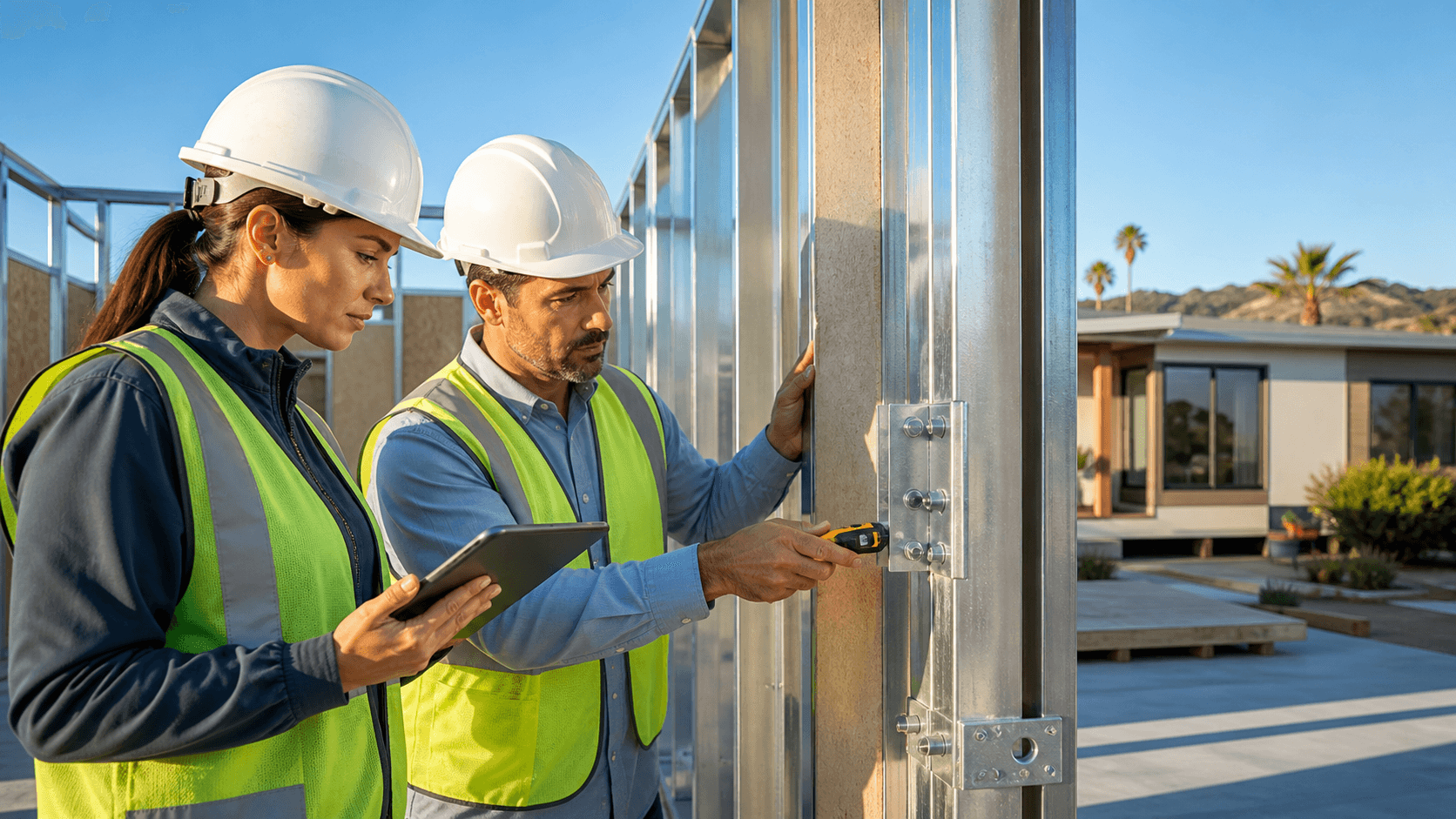
Because the structure is a non-combustible, precision-engineered light-gauge steel system, it does not rot, warp, or shrink the way wood can. That means better dimensional stability and fewer surprises during framing, finishes, and inspections. Less twisting and movement in the frame usually means:
- Cleaner assemblies on site
- Reduced rework
- Fewer field adjustments when inspectors check alignment or details
Quality control starts before anything leaves the factory. Each modular volume, panelized wall, floor, or roof assembly moves through internal QA checks, and HCD or HCD-approved inspectors review the factory-built portions covered by their scope. By the time panels or modules get to the job site, key structural and life-safety items have already been inspected, which helps local inspectors focus on their part and can lead to smoother closeout.
From Permit Approval to Completion with One Integrated Team
Once permits are in hand, most teams want to know how long it will actually take to see a finished building. With Fast Struct's precision-engineered light-gauge steel system, a lot of the work happens in parallel. Site crews can handle foundations and utilities while the factory builds the structural system.
After permit approval, many Fast Struct projects move from fabrication to completion in approximately 3 to 5 months, depending on:
- Site conditions and grading
- Utility coordination with local providers
- Jurisdictional inspections and scheduling
- Overall project size and scope
On site, what you see depends on the delivery method selected for your project:
- Depending on the project type, modular units can arrive substantially complete inside, then get set, connected, and finished.
- Panelized systems are assembled rapidly into full walls, floors, and roofs, then finished by local trades for greater design flexibility.
- Hybrid projects combine both, so some parts lift in as near-finished volumes while other areas frame out from panels for more design freedom.
Fast Struct is a licensed contractor and a state-approved, HCD-licensed manufacturer, with a rare combination of licenses that covers home manufacturing, general contracting, and commercial work. That means one integrated team from early planning through final inspection, design, engineering, manufacturing, installation, and closeout all coordinated under a single roof.
Our showroom and factory in Santa Clara put Fast Struct in the heart of Silicon Valley, just minutes from major tech headquarters and closely aligned with the community we serve. We work with homeowners, developers, architects, and builders who need a system that fits California's fire, seismic, and labor challenges.
Take the Next Step Toward a Precision Steel Project
Navigating factory-built permits in California does not have to feel like a maze. When the factory-built system, delivery method, and permit plan are aligned from the start, the process becomes clearer and more predictable. Fast Struct's precision-engineered light-gauge steel system, built from U.S.-made, non-combustible steel, is designed to handle California's focus on fire safety, seismic strength, and labor efficiency while avoiding rot, warp, and shrink issues.
The best time to think about permits, delivery method, and digital manufacturing is at the very beginning of a project. By involving Fast Struct, an HCD-licensed manufacturer and licensed contractor that understands both HCD approvals and local building departments, you can choose modular, panelized, or hybrid in a way that supports your site, design goals, and schedule instead of fighting them, with one team guiding you from concept through completion.
Simplify Your California Modular Build With Expert Permit Support
If you are ready to move forward, we can help you navigate modular home permits in California with clarity and predictable timelines. At Fast Struct, our process is built to reduce delays so your project can move from planning to installation with confidence. Share your project details and goals, and we will outline the next steps tailored to your site and schedule. Have questions before you begin? Just contact us and we will walk you through what to expect.