Hybrid Steel Homes That Actually Fit Silicon Valley Lots
Backyard homes, flag-lot infill, and rear units on tight parcels are popping up all over Silicon Valley. Families want more space, rental income, or a place for relatives, and many hope to start work in the summer, so move-in lines up with school schedules. The challenge is that the best spots on the property are often in the back, behind an existing house, down a skinny driveway, or tucked behind a shared easement.
On these kinds of sites, access and crane reach matter as much as floor plans. Large factory-built modules may look simple in a brochure, but if a truck cannot reach your site or a crane cannot safely lift over neighbors, that "simple" solution can stall fast. That is why we focus on hybrid construction homes that are tailored to each California lot, not one fixed product.
We are a Silicon Valley-based licensed contractor and HCD-licensed manufacturer. In our Santa Clara factory, we connect digital design, engineering, and U.S.-made steel manufacturing so we can choose a modular, panelized, or a hybrid approach for each project. Let us walk through how that helps with access, crane planning, and permits on tricky flag lots and easement sites.
Why Flag Lots and Easement Sites Break Typical Prefab
Flag lots and easement parcels can be great for privacy, but they are hard on simple prefab assumptions. Common constraints show up fast:
- Narrow shared driveways or easements
- Limited street frontage for trucks and cranes
- Mature trees and tight fences that owners want to keep
- Overhead wires and low lines in the way of large loads
- Neighbors very close to property lines in rear yards
Traditional box-style prefab often depends on oversized trucks and a very large crane setting a few big modules in one or two days. On a rear lot, that can mean:
- Street closures and traffic control
- Damage risk to trees, fences, or landscaping
- Long crane reach that pushes equipment into yards or driveways
- Added complexity when utilities must snake through tight spaces
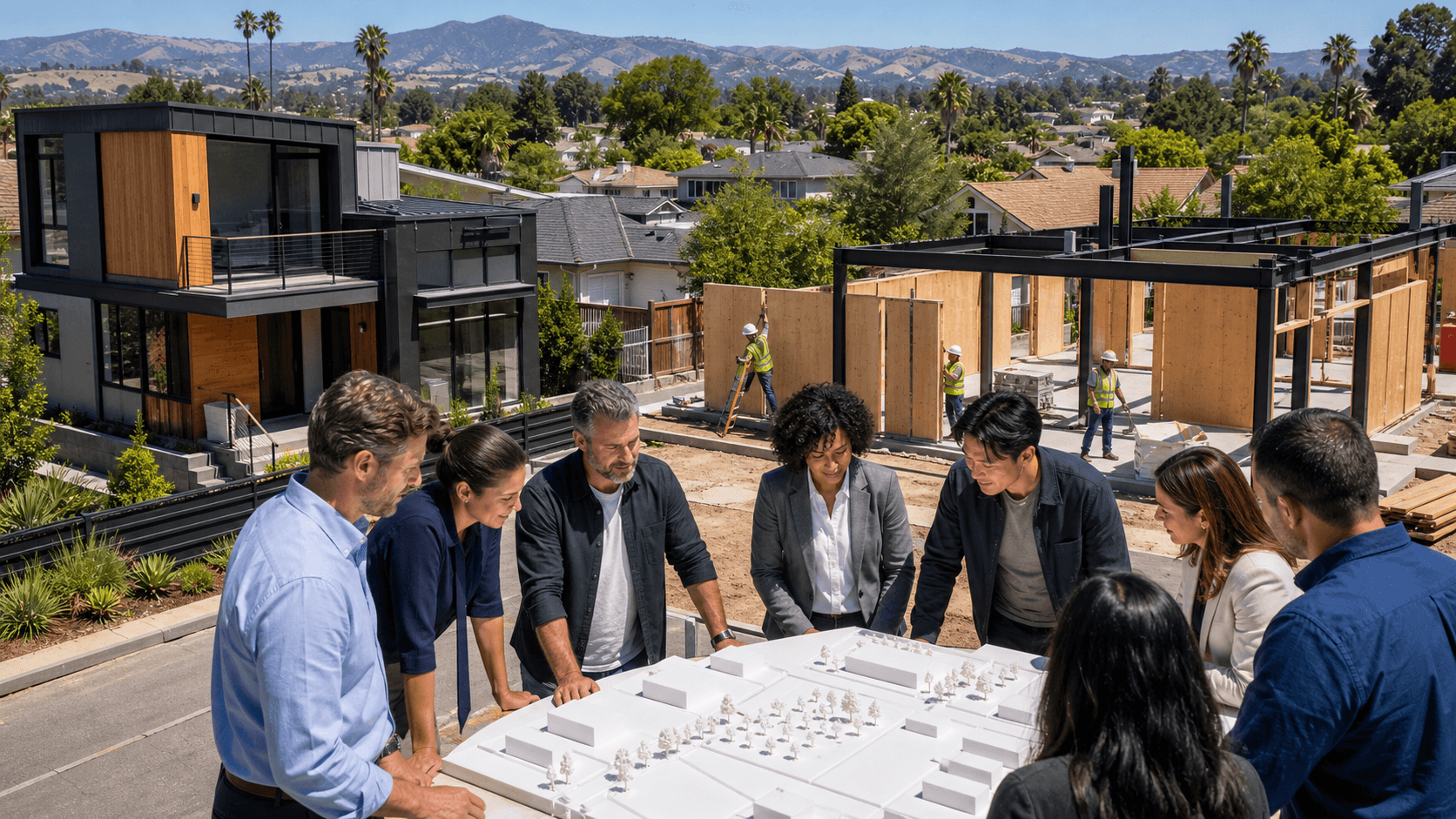
Some providers push the same delivery method on every project. Our approach is different. We start with a site-first planning process where we study access, staging, crane positions, and utility paths before we choose modular, panelized, or hybrid. The goal is simple: match the construction method to the lot, not force the lot to match a preset system.
Modular, Panelized, or Hybrid: Picking the Right Path
We use one precision-engineered light-gauge steel system, but we can deliver it in three main ways.
Modular means 3D volumes:
- Faster installation on site
- Depending on project type, units can arrive substantially complete
- Great when access is clear, and crane reach is manageable
Panelized means flat-packed pieces:
- Walls, floors, and roof panels shipped in compact bundles
- More flexibility for tight driveways and easements
- Helpful for highly customized designs or tricky backyards
Hybrid construction homes blend both:
- Smaller modular sections where trucks and cranes can reach
- Panelized elements where tight turns, trees, or wires block big loads
- Delivery tuned to the specific site, design, and schedule
Because our digital workflow connects design, engineering, and manufacturing, we can produce any of these methods from a single coordinated model. We are not juggling separate product lines. That lets us choose the best fit per project instead of trying to fit every site into the same prefab box.
Precision Steel Systems Built for California Conditions
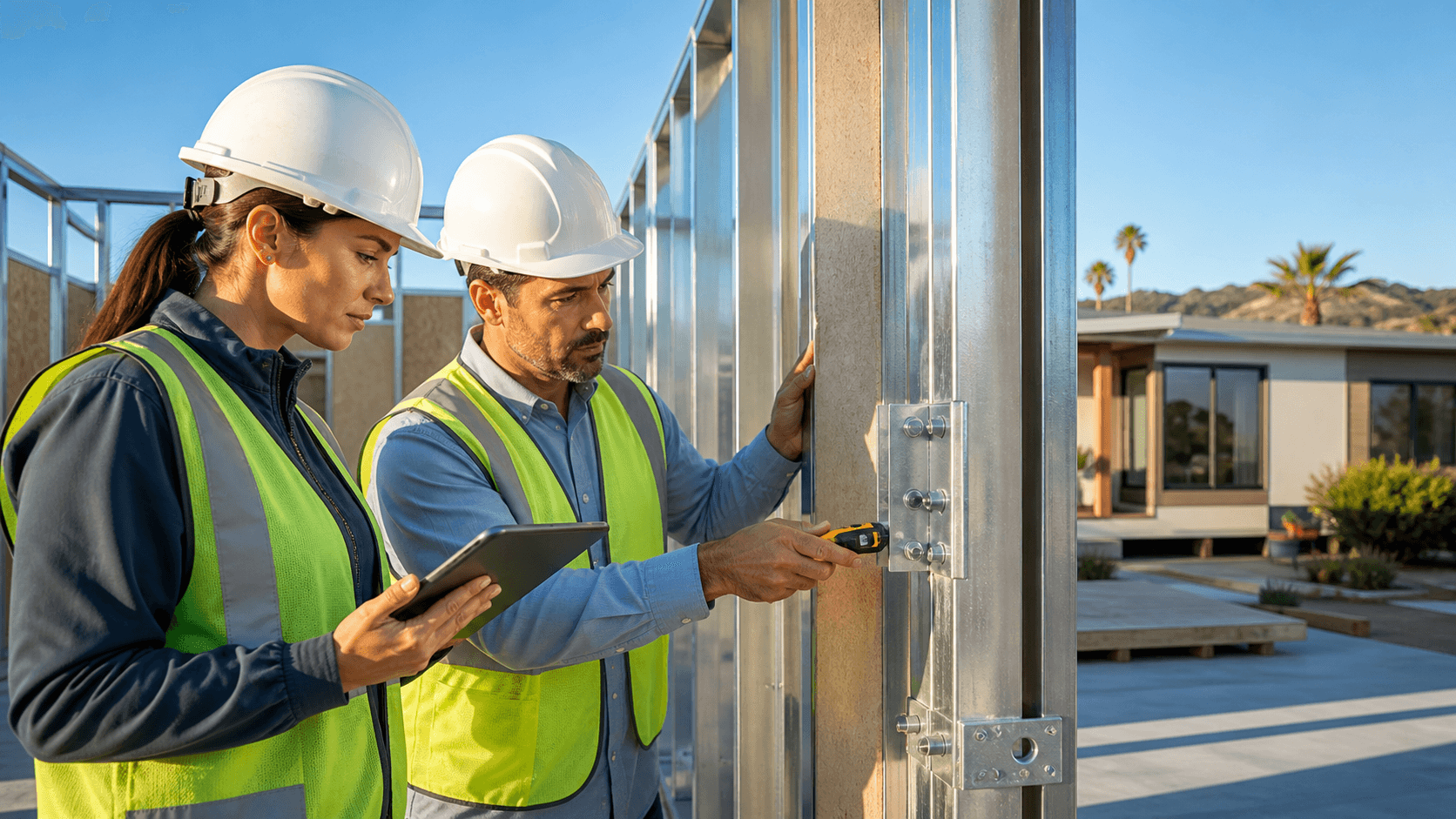
At the core of all three paths is our precision-engineered light-gauge steel system. We use U.S.-made steel that is digitally modeled, then converted into production-ready files. Those files go straight into advanced steel framing machines in our Santa Clara factory.
That process gives key benefits for California conditions:
- Non-combustible structure for fire-conscious areas
- No rot, warp, or shrink issues from moisture or time
- Better dimensional stability, so finishes fit as planned
- Factory precision that supports cleaner assembly
- Less rework in the field, which supports tight schedules and local labor limits
The manufacturing sequence is straightforward. Steel is cut and formed with high precision, then assemblies are built in a controlled environment. Every assembly passes structured factory QA inspections before modular units or panelized components move to the next stage, helping ensure clean field installation and reduced rework on site. When they leave the factory, they are ready for rapid on-site assembly, which helps a lot on infill parcels where neighbors do not want months of framing noise.
Because the assemblies are consistent and accurate, inspections tend to go smoother and there are fewer surprises during construction. That reliability matters when a project is squeezed behind existing homes and there is very little room to fix mistakes in the field.
Making Hybrid Construction Work on Flag Lots
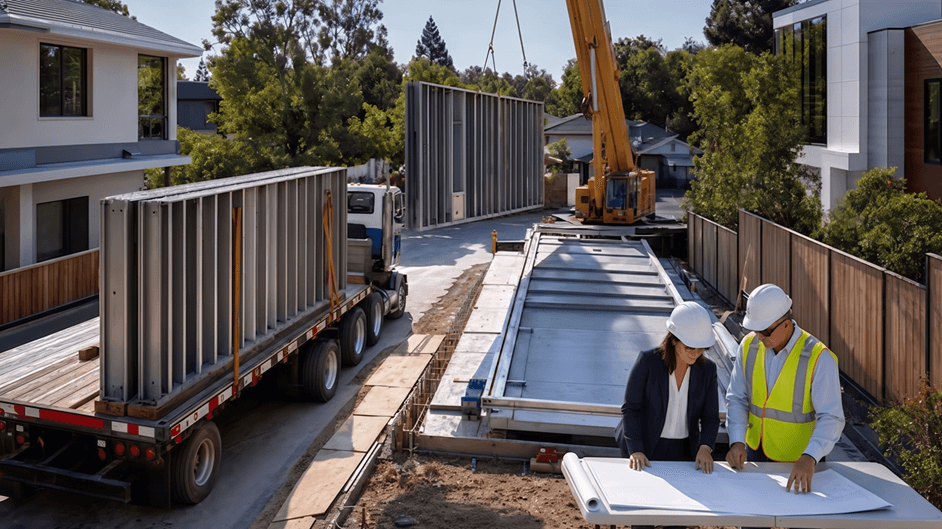
Hybrid construction really shines in the "last 100 feet." On many flag lots, we can get a truck down the shared drive, but not with one giant box. So we break the home into:
- Modular sections sized to the available truck and crane path
- Panelized sections where sharp turns or overhead wires make big pieces risky
Once the foundation and utilities are in, we plan deliveries so work moves quickly and neighbors keep access to their homes. That might mean:
- Short, timed deliveries instead of all-day street blockages
- Using driveways or approved street parking for brief staging
- Stacking and assembling panels in the rear yard with minimal impact to front neighbors
Depending on the project type, modular units may arrive substantially complete, while panelized assemblies are erected rapidly on site. Because every part uses the same light-gauge steel system, modules and panels connect cleanly and share one structural logic across the whole home.
Crane Strategy, Seasonal Planning, and Permits on Complex Lots
Crane planning is critical to rear-lot project success. On each project, we look at:
- Boom reach and how far the crane must lift into the rear yard
- Swing radius so we avoid trees, wires, and nearby homes
- Setup locations that keep neighbors' driveways open where possible
- Whether a smaller crane doing more lifts is better than one giant crane trying to do it all
For Silicon Valley neighborhoods, staging often means using short sections of driveway, limited street parking, and tight delivery windows. Summer and early fall can be great installation times because of longer daylight and the way many families plan around school and holiday schedules. Our factory sequencing aims to line up fabrication with those windows.
On the permit side, factory-built work has a clear split in oversight. HCD or HCD-approved agencies review and inspect the components we build off-site. Local building departments focus on:
- Zoning and planning rules
- Foundation and grading
- Utilities and connections
- Installation details and all work outside the approved factory-built scope
This regulatory split is especially helpful on flag lots and easement sites. Much of the structural precision work is already reviewed in the factory, so local inspectors can focus on access, fire setbacks, and how the home fits the specific neighborhood. Because we are both a state-approved, HCD-licensed manufacturer and a licensed contractor, we coordinate submittals and keep factory and field scopes aligned. A hybrid approach can make it even clearer which pieces fall under each authority, which helps reduce confusion for owners and officials.
Once permits are approved, many of our projects move from fabrication to completion in roughly 3 to 5 months, depending on site conditions, utilities, jurisdiction, and scope. That is often much faster than traditional site-built framing on infill lots, where labor gaps and inspection waits can stretch over multiple seasons. For families timing a move, rental switch, or multigenerational living plan around late summer or fall, that speed can make a real difference.
Our showroom and high-tech factory in Santa Clara sit in the heart of Silicon Valley, just minutes from major tech campuses and the neighborhoods we serve. With our rare combination of home manufacturing, general contractor, and commercial licensing, we connect design, engineering, and U.S.-made steel manufacturing into one local team focused on hybrid construction homes that actually work on challenging California lots.
Get Started With Your Project Today
If you are ready to explore how smarter building methods can speed up your schedule and improve quality, our team at Fast Struct is here to help. Learn how our hybrid construction homes approach integrates efficiency, durability, and design flexibility for your next project. Share your goals, timeline, and budget, and we'll guide you through clear, site-specific options tailored to your property. To talk through your plans with a specialist, simply contact us today.