California residential zoning can feel confusing, especially when you are also trying to choose between modular, panelized, or hybrid construction. Zoning shapes what you can build, where you can place it, how tall it can be, and even how you get trucks and cranes on site. When you add Fast Struct's factory‑built hybrid steel system into the mix, it helps to understand how state approvals, local rules, and your building system all fit together.
This article breaks down how California residential zoning works with Fast Struct's precision‑engineered light‑gauge steel system. We walk through zoning basics, state and local approvals, how modular, panelized, and hybrid delivery methods fit different sites, and why Fast Struct's steel system is such a strong match for California conditions.
How California Residential Zoning Shapes Your Options
Zoning is the rulebook for what you can build on a piece of land. For a home or small residential project in California, local zoning usually controls things like:
- Allowable uses, such as single-family, duplex, or multifamily
- Building height and number of stories
- Setbacks from property lines
- Lot coverage and sometimes floor area ratio
- Required parking and access
All of this drives your building shape, footprint, and where doors, driveways, and paths can go. On some sites, fire zones, hillside rules, or coastal rules also apply. Add ADU rules, and the lot can start to feel like a puzzle.
California residential zoning also links to safety and environment. For example:
- High fire areas often have stricter rules around materials and defensible space
- Steep or hillside sites may limit height, grading, and retaining walls
- Coastal areas can add extra reviews and design limits
- ADU rules can open new options but still must respect setbacks and height
Different factory-built systems respond to these limits in different ways. Fast Struct focuses on selecting the right system for each site instead of pushing a one‑size‑fits‑all product. In Fast Struct's approach:
- Fully finished modular 3D volumes (built from Fast Struct's precision‑engineered light‑gauge steel system) work best when:
Street and crane access are clear
The zoning envelope allows simple stacking or side‑by‑side placement
You want faster delivery with more of the interior work completed in the factory
- Panelized systems, with wall, floor, and roof panels shipped flat, often fit better when:
Lots are tight, flag-shaped, or squeezed between existing homes
Sites are on narrow streets or in older neighborhoods with tricky access
Designs are more custom and must bend around height or massing limits, while still using Fast Struct's precision‑engineered light‑gauge steel framing
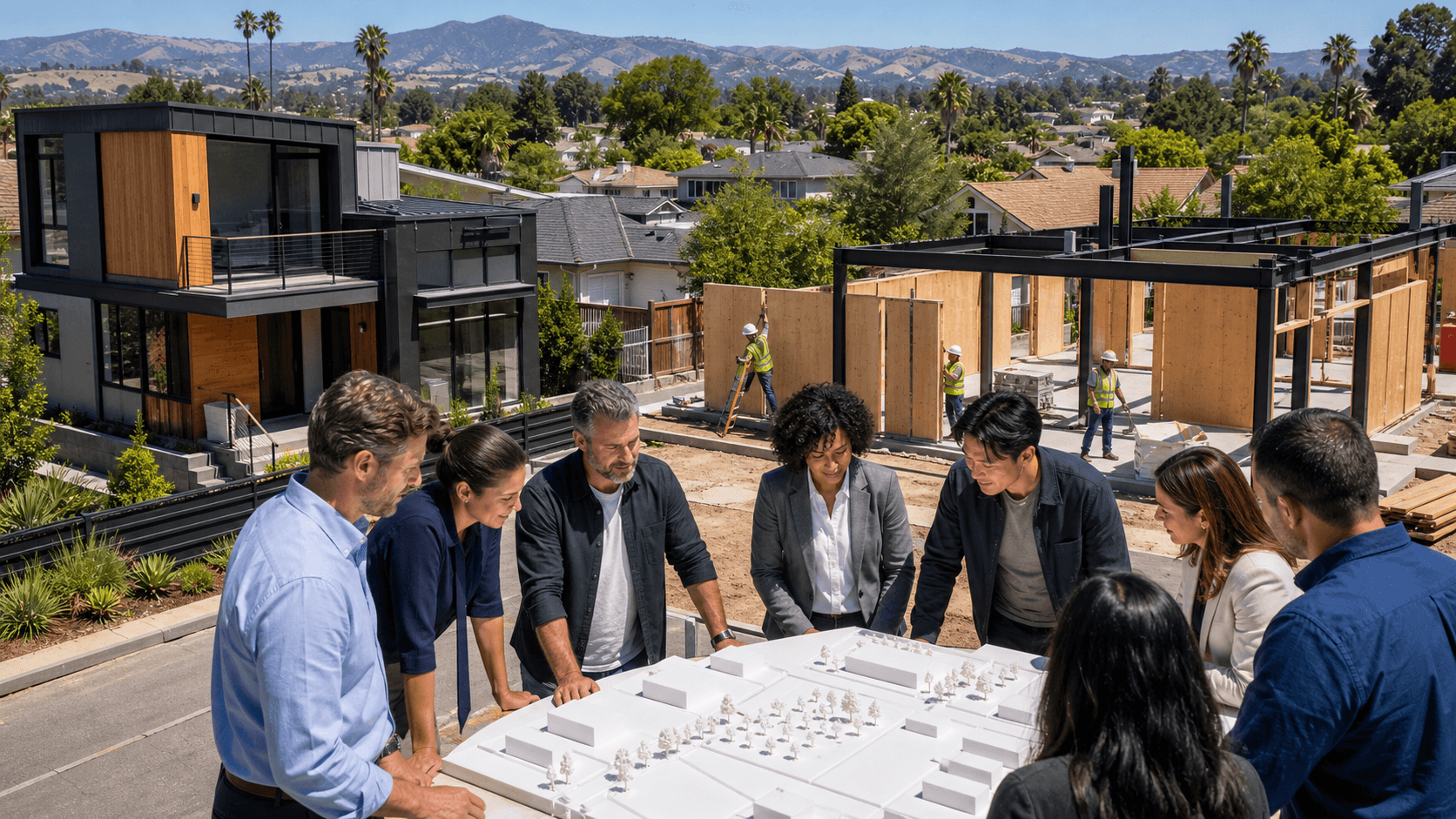
On many projects, the smartest move is to think about zoning and access at the same time as you pick the structural system. When architects, developers, builders, and homeowners bring Fast Struct's factory team into early schematic design, it is easier to:
- Shape massing to the zoning envelope
- Plan driveways and crane paths
- Decide where modular volumes make sense and where panelized delivers more flexibility
- Configure a hybrid solution that matches each lot's zoning, access, and schedule
HCD Approvals, Local Permits, and Who Inspects What
Factory‑built housing in California adds a second layer of review on top of local zoning. The state, through the Department of Housing and Community Development (HCD) or HCD‑approved agencies, looks at the parts built in the factory. Local cities and counties still control what happens on the site.
For Fast Struct's precision‑engineered light‑gauge steel components, the split typically looks like this:
- HCD or HCD‑approved agencies review and inspect the factory-built components that are manufactured off-site, like modular volumes or panelized assemblies produced by Fast Struct as an HCD‑licensed manufacturer
- Local jurisdictions review and inspect everything that is site‑specific, like zoning compliance, foundations, installation, utilities, grading, and any work outside the approved factory‑built scope
A typical path for a Fast Struct hybrid steel project often includes:
- Planning and zoning review with the city or county
- Building permit submittal that includes architectural plans and engineered Fast Struct light‑gauge steel details
- HCD‑related approvals for the Fast Struct factory‑built scope
- Local inspections of foundations, utility connections, on-site framing tie-ins, and final sign‑off
Because Fast Struct is a licensed contractor and a state‑approved and HCD‑licensed manufacturer, our team closes the gap between factory drawings and field conditions. Fast Struct's rare license combination, home manufacturing, general contracting, and commercial licensing, means one integrated team can coordinate design, permitting, factory production, and on‑site work from start to finish.
A digital workflow, where design models turn into production‑ready files, helps keep drawings aligned so plan check reviewers see clear, consistent details and field crews have fewer surprises.
Modular, Panelized, or Hybrid: Matching System to Site
Not every California site wants the same construction approach. Fast Struct's core differentiator is choosing the right construction method, modular, panelized, or hybrid, based on the project's zoning, site access, and schedule rather than pushing a single, one‑size‑fits‑all system.
Fast Struct Modular
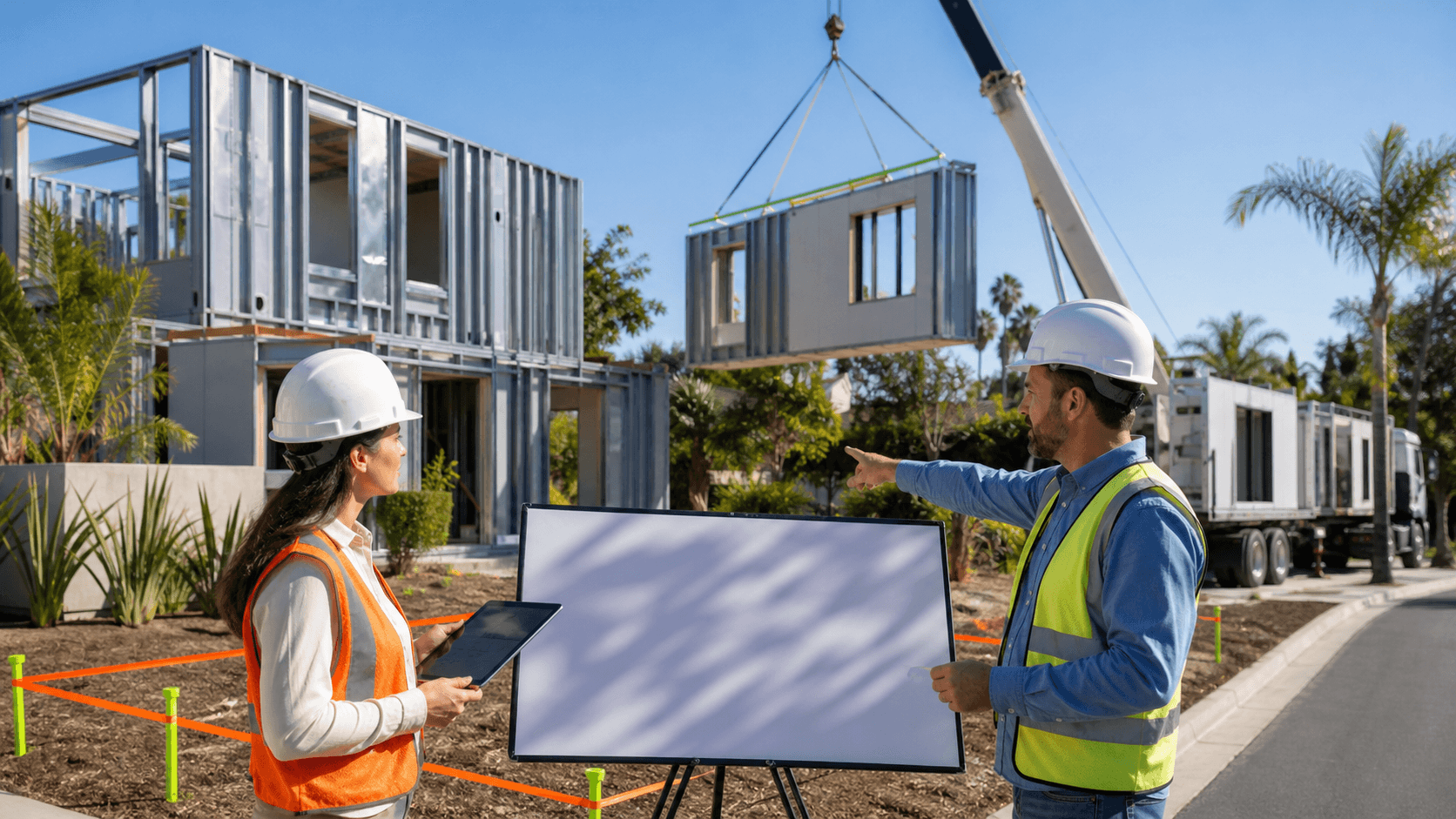
Fast Struct's modular delivery uses precision‑engineered light‑gauge steel 3D volumes. Modular is often the fastest option because more of the work is completed in the factory. Depending on the project type, these modular units can arrive substantially complete, with much of the interior already in place. Modular tends to be a strong choice when:
- Zoning allows straightforward shapes and stacking
- Sites are more open or suburban
- Crane access and staging areas are available
- Speed and schedule certainty are high priorities
In this context, "modular" with Fast Struct means faster, more finished 3D volumes manufactured with U.S.-made, high‑quality, light‑gauge steel under factory precision.
Fast Struct Panelized
Fast Struct's panelized approach uses factory‑built wall, floor, and roof panels that ship flat and then assemble quickly on site. Panelized delivery often works best when:
- Lots are narrow, irregular, or landlocked
- Neighborhoods have tight infill conditions or height limits
- Designs need more custom geometry, while still relying on Fast Struct's precision‑engineered light‑gauge steel structure
- Crane or truck access is limited and flat‑shipped components are easier to maneuver
Panelized systems give more flexibility for custom designs and tight lots while still benefiting from factory precision and cleaner on‑site assembly.
Fast Struct Hybrid
Hybrid projects combine both approaches. Fast Struct may use modular volumes for the most repetitive pieces, like stacked units, and panelized framing for unique wings, entries, or stepped areas where zoning or access gets tricky. Across a small subdivision or multifamily project, Fast Struct can even vary the mix from building to building to match each lot's zoning, access, and schedule.
Hybrid is Fast Struct's best‑fit delivery method, tailored to site, design, and timeline: fully finished modular volumes where speed and repetition make sense, panelized wall, floor, and roof systems where flexibility is critical.
The key idea is simple: with Fast Struct, the best system is always the one that fits your zoning rules, your site access, and your schedule, not a one‑size‑fits‑all product.
Why Fast Struct's Light‑Gauge Steel Fits California so Well
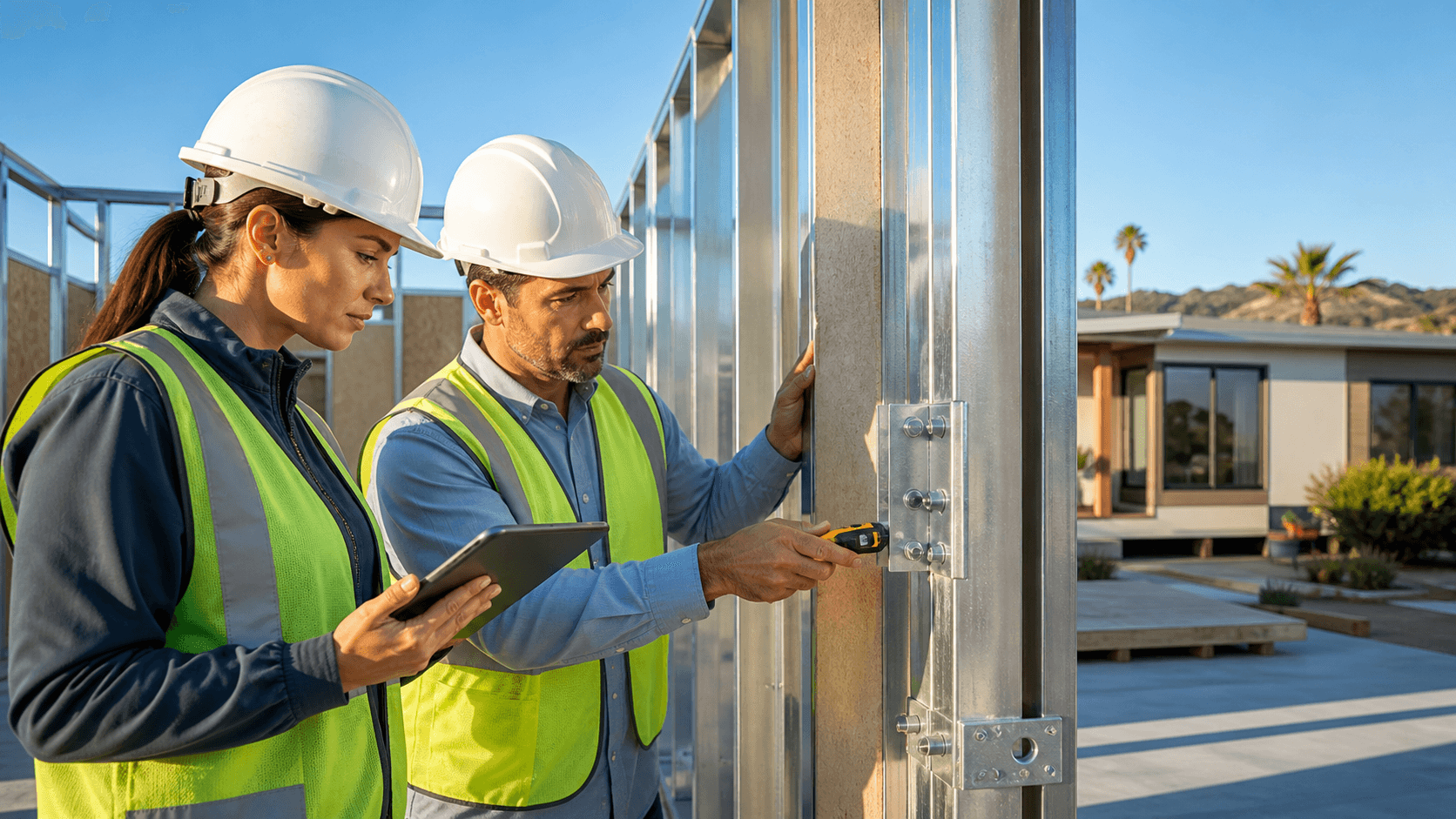
California brings a specific set of challenges for residential projects: wildfire risk, seismic activity, and ongoing labor pressure. Fast Struct's precision‑engineered light‑gauge steel system is designed as a direct response to those conditions.
Some of the core benefits of Fast Struct's system include:
- U.S.-made, high‑quality steel for consistent performance
- A non‑combustible structure, helpful for wildfire‑adjacent areas and strict fire codes
- No rot, warp, or shrink, so framing stays dimensionally stable over time
- Better dimensional stability that supports straighter walls and cleaner finishes
Factory precision also matters. When Fast Struct's steel framing is cut and formed with high accuracy, then assembled in a controlled factory environment, you get:
- Cleaner assembly and fewer field cuts
- Reduced rework for trades on site
- More predictable inspections because assemblies match the engineered drawings
- A better fit for California's fire, seismic, and labor challenges, where reliability and fewer site‑hours are critical
Fast Struct's showroom and factory are located in Santa Clara, in the heart of Silicon Valley, minutes from major tech headquarters. This high‑tech, data‑driven approach to residential construction aligns closely with the local community and the market Fast Struct serves. Many teams that work in software and advanced hardware now expect similar precision, tracking, and reliability from their building systems, and Fast Struct is built around that expectation.
Inside Fast Struct's Digital Design‑to‑Factory Workflow
A modern Fast Struct hybrid steel project starts long before the first stud is formed. The process connects design, engineering, and manufacturing so each step feeds the next, creating a seamless digital workflow from concept to site.
It typically looks like this:
- Architectural and structural plans are developed with Fast Struct's precision‑engineered light‑gauge steel system in mind
- These plans are translated into detailed digital models
- The models turn into production‑ready files that define each stud, track, and panel
- Those files feed directly into Fast Struct's automated steel framing machines
The machines cut and form U.S.-made light‑gauge steel with high precision for both modular volumes and panelized systems. Assemblies move through factory QA in Fast Struct's Santa Clara showroom and factory before they ever reach the site. That front‑loaded quality helps keep zoning‑sensitive projects on track because there are fewer surprises in the field.
On site, Fast Struct's completion path depends on the chosen system:
- Depending on the project type, Fast Struct modular units can arrive substantially complete, then be set on prepared foundations and connected on site
- Fast Struct panelized systems are assembled rapidly in the field, giving more flexibility to respond to unique zoning envelopes or design choices
- Hybrid projects combine both, using modular where speed and repetition are ideal and panelized where flexibility and access are most important
After permit approval, many Fast Struct projects move from fabrication to completion in approximately 3 to 5 months, depending on site conditions, utility work, jurisdictional requirements, and scope. That is still significantly faster than traditional construction approaches in many California markets, where review times and field labor can stretch timelines.
Planning Your Next Zoning‑Smart Fast Struct Project
When one integrated Fast Struct team handles the precision‑engineered light‑gauge steel system, the factory manufacturing, and the licensed contracting for on‑site work, there is less chance for things to fall through the cracks between drawings, approvals, and field crews. That helps zoning limits, HCD rules, and site inspections line up with the actual building that arrives on your lot.
Because Fast Struct combines home manufacturing, general contractor, and commercial licensing, you get one team from start to finish: design coordination, engineering, HCD approvals for factory‑built components, local permitting support, fabrication, delivery, and on‑site installation.
For architects, developers, builders, and homeowners, the most helpful time to involve Fast Struct is early, when zoning analysis, system choice (modular, panelized, or hybrid), and digital modeling are still flexible. With more daylight hours and many teams planning ahead for the next building season, summer is a smart window to lock in zoning clarity and get a realistic path from site plan to factory floor to finished project.
Get Started With Your Project Today
If you are planning a new build or a major renovation, we can help you navigate California residential zoning with clarity and confidence. At Fast Struct, we use a structured, transparent process so you understand every step before you commit. Share a few details about your property and goals, and we will outline your best path forward. If you are ready to move ahead, simply contact us to schedule a consultation.