Clear the Path to Construction Success
Permits decide how fast your modular home or ADU actually gets built in California. They can move your project forward smoothly, or they can stall it for months. Understanding how modular home permits in California really work gives you more control, less stress, and a better shot at a clear timeline.
Modular and panelized homes do not follow exactly the same permit path as a traditional site-built house. Because factories are involved, the state plays a bigger role, especially on what is built inside the modules. Local cities and counties still care a lot about where the home sits, how it connects to utilities, and how it fits local rules.
In this guide, we walk through the full path from your first questions about zoning, all the way to final inspection sign-off. We focus on what homeowners, small investors, and ADU builders need to see early, so you can plan your project with fewer surprises. Since many people submit in late spring, we also touch on timing, so your permits are in motion before late-year holidays slow down local agencies.
How California Regulates Modular and Factory-Built Homes
Modular and factory-built homes in California sit under a shared system between the state and your local city or county. The state looks at what is built at the factory. Local agencies look at what happens on your land.
At a high level, there are two tracks that work together:
- State-level approval from the California Department of Housing and Community Development (HCD) for factory-built modules and panels
- Local jurisdiction permits for foundations, site work, and connections to power, water, and sewer
When we talk about terms, it helps to keep them simple:
- Modular home: a home built in large three-dimensional sections in a factory, then shipped to your site
- Panelized home: flat wall and floor panels built in a factory, assembled on your site
- Factory-built housing: the state label that covers both modular and panelized units reviewed by HCD
- ADU: an accessory dwelling unit, usually a smaller home that shares a lot with a main house
HCD approval covers the structural, electrical, plumbing, and mechanical systems inside the factory-built units. That means many code checks happen before the modules ever leave the plant. Local plan reviewers can lean on those approvals and focus more on soils, foundations, grading, fire access, and how the home fits your property.
A few myths still float around:
- "Modular homes do not need permits." They do. You still need local permits for the foundation, site work, and connections.
- "ADUs are always approved automatically." State law pushes cities and counties to approve qualifying ADUs faster, but you still file applications, respond to comments, and pass inspections.
Mapping the Modular Permit Journey in California
Every project is unique, but most modular home permits in California move through the same basic steps.
Typical stages include:
- Pre-design and feasibility: zoning checks, setbacks, height limits, ADU rules, and basic site access
- Design and engineering: site plan, foundation design, grading, structural calculations, and utility planning
- Submittal: digital plan sets sent to your local building department for plan check
- Corrections: responses to plan review comments, revised drawings, and clarifications
- Inspections: foundation, utilities, any required special inspections, and final occupancy
Along the way, you may see several permit types tied to one project file:
- Building permit for the home, foundation, and structural work
- Grading permit for cut, fill, or drainage changes
- Electrical, plumbing, and mechanical permits
- Sewer or septic approvals, and in some areas, water district sign-off
- Special approvals in coastal zones or mapped high fire hazard areas
When you work with a factory-based provider that treats design, engineering, and production as one system, your permit set can be more consistent. That makes it easier for reviewers to follow the story from soils report, to foundation details, to how the HCD-approved modules attach and tie into utilities.
Timing is just as important as drawings. Many departments see surges in spring and summer as people try to get projects started before the school year and holiday periods. Late-year reviews can slow when staff take time off, and in some regions, added reviews during peak wildfire months can stretch timelines. Building in realistic expectations for each stage helps you plan move-in dates and financing.
Local Rules That Make or Break Your Site Approval
Even with modular construction, your local zoning and planning rules decide what you can build on your lot. These rules shape:
- Minimum lot size and maximum lot coverage
- Height limits and allowed stories
- Parking requirements and driveway access
- Where structures can sit in relation to property lines
For ADUs and modular infill, statewide ADU laws remove some local barriers and set time limits for review of qualifying units. Still, each area adds its own flavor, especially in coastal areas, hillside neighborhoods, and high fire hazard zones where design, access, or defensible space rules may be tighter.
Setbacks and easements matter both on paper and in the real world. They affect:
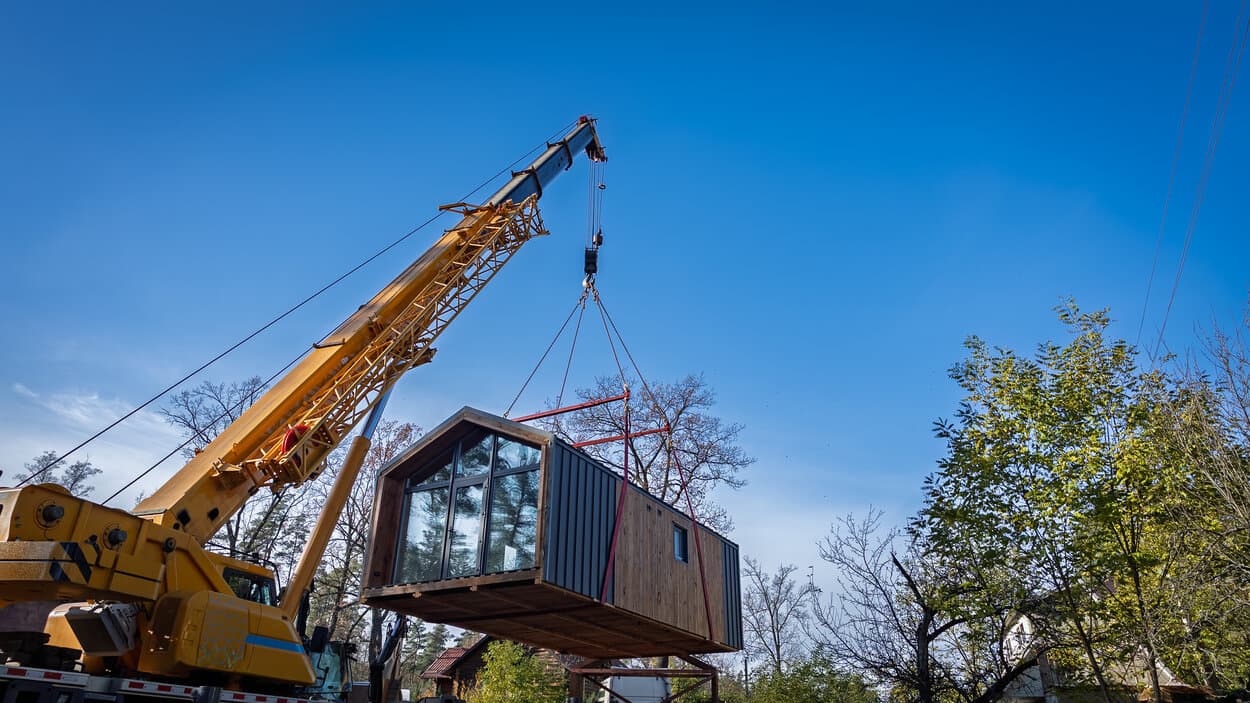
- Where the crane can sit during Set Day
- How trucks can reach the site
- Where utilities enter and cross the property
- How close you can build to neighbors, alleys, or public rights-of-way
Some site conditions almost always trigger extra review, such as:
- Sloped properties that need retaining walls or special foundation designs
- Older septic systems that need upgrades or replacement
- Flood zones where finished floor height must clear certain levels
Early surveys, basic soils information, and utility records can prevent long pauses later. When we run digital pre-checks on zoning, slopes, and access, we can flag many of these issues before you submit, so your application arrives more complete and easier to review.
Turning Permits Into a Predictable Step by Step Process
Permits feel less stressful when you break them into a simple plan instead of one big cloud of paperwork. Think of it in three big buckets.
Homework:
- Gather old records like plats, prior permits, and utility maps
- Confirm zoning, ADU allowances, and any overlay zones
- Note any HOA rules or design review boards
Team:
- Choose a modular partner that can handle design and factory production together
- Bring in engineering support, including structural and sometimes civil
- Add a permit expediter when local rules are especially complex
Documents:
- Site plan with dimensions, contours, and utility locations
- Floor plans and elevations for the home or ADU
- Structural details and calculations
- Title 24 energy forms when required
- Green building or reach code forms if your city asks for them
Most California jurisdictions now expect digital plan sets with clear sheet labels and bookmarks. Including HCD approval details for the factory-built components and any utility coordination letters gives reviewers confidence that field work and factory work match.
The "correction cycle" is normal. Plan reviewers leave comments, your team replies, and the set gets cleaner. Fast, clear responses keep that loop tight. When design, engineering, and factory production all come from one coordinated team, there is less chance of conflicting details and fewer late change orders in the field.
Fees are part of the process too. Plan check, school, impact, and inspection fees all show up along the way. While total costs vary by area, modular builds often compress on-site time, which can reduce carrying costs like temporary housing or interest.
How Fast Struct Streamlines Permits From Drawings to Move In
At Fast Struct, we focus on making modular home permits in California feel like a clear path instead of a puzzle. From our base in Silicon Valley, we design and produce precision-engineered panelized and modular steel homes and ADUs, with services that run from early zoning checks to the day you move in.
Our approach brings zoning and feasibility review, design, engineering, and permit submission into one flow. Digital design tools and in-house engineering help reduce plan errors and align factory drawings with field conditions. Because our homes are factory-built, the HCD-approved modules arrive with structural, electrical, plumbing, and mechanical systems already inspected at the plant, which supports a smoother review for those parts of the project.
We then coordinate that factory work with local foundation permits, utility trenching, and inspections in a single schedule. That means Set Day is not a surprise; it is a planned event backed by permits, inspections, and clear communication. With a thoughtful permit plan and the right team, the path from first questions to final sign-off becomes a step-by-step process that you can see and trust.
Get Started With Your Project Today
If you are ready to move forward, we can guide you step by step through modular home permits in California so your build stays on schedule. At Fast Struct, our team focuses on simplifying the approval process and reducing unnecessary delays. Share a few details about your project and we will outline a clear path from initial planning to installation. For timely help with your next move, contact us today.